

Six new deaths in seven days. The West Nile virus toll in Greece is rising, with the death toll now reaching 30 , up from 24 last week, according to the latest figures from the Hellenic National Institute of Public Health . In the same period , 34 new domestic cases were also recorded, indicating that this year’s transmission season is still far from over.
A total of 324 domestic cases have been diagnosed and reported since the start of surveillance until September 9. Of these, 217 presented with Central Nervous System manifestations, i.e. encephalitis, meningitis or acute flaccid paralysis, while another 107 patients presented with mild manifestations.
This ratio needs careful reading, because at first glance it seems to show an extremely aggressive virus. The reality is more complex. In the international bibliography, it is estimated that the vast majority of those infected by the virus do not show any symptoms at all, while a small percentage manifest mild, flu-like symptoms that rarely lead to a diagnosis. Serious neuroinvasive forms concern a small number. So, if, in the official data, two-thirds of the cases are severe, this does not mean that the virus hits most people so hard. It means that mainly those who are hospitalized are recorded , that is, that the real spread in the population is many times greater than what is recorded.
Equally telling is a second element. All of those who have lost their lives have been over 65 years of age, without exception. Age is the strongest known risk factor for severe illness, along with underlying diseases and immunosuppression. In practice, this means that protection should be primarily targeted at the elderly and those with chronic health problems, even when they themselves do not feel they are at risk.
Geographically, the virus has now been recorded in 73 municipalities , which belong to 22 Regional Units . Cases have been identified in the regions of Attica, Thessaly, Central Macedonia, Eastern Macedonia and Thrace, Peloponnese, Central Greece and Crete . In Attica, cases have been noted in Eastern Attica, in the North, West, Central and South Sectors of Athens, as well as in Piraeus. In the rest of the country, the list includes the Regional Units of Karditsa, Larissa, Trikala, Imathia, Thessaloniki, Pella, Pieria, Serres, Laconia, Evia, Boeotia, Rethymno, Heraklion, Rodopi and Evros .
The element that stands out this year, and to which EODY makes special mention, is Attica . The Organization speaks of “particularly intense circulation of the virus”, with the number of cases in specific areas being increased compared to previous years . This change is significant, as historically the epicenter of the Greek epidemiological picture was in the lowland and water-rich parts of Macedonia and Thessaly. The shift towards a densely populated urban center changes the size of the exposed population and therefore the expected number of severe cases.
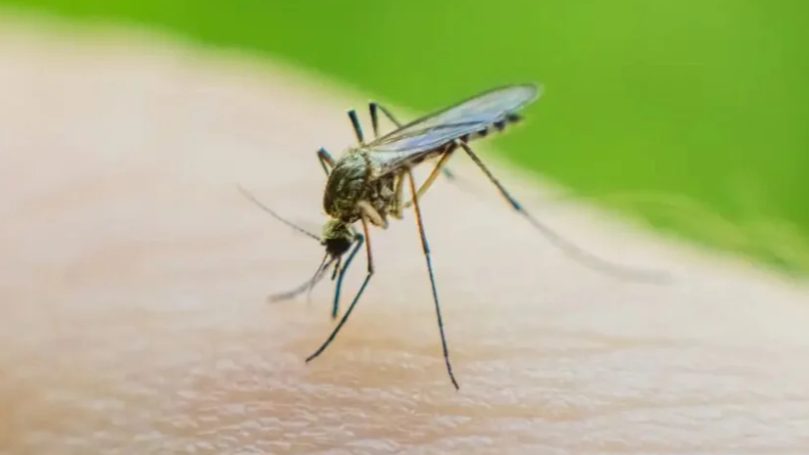
To understand why, we need a reminder of how the virus circulates. Birds are the natural reservoir, while the virus is transmitted by mosquitoes of the genus Culex, the most common mosquitoes that one can also find in cities. Humans are the final host, they do not transmit the virus to another person through contact. The density of the mosquito population, the temperature and the existence of stagnant water therefore largely determine the intensity of each period. And this is precisely where prolonged high temperatures come into play, which lengthen the duration of circulation and accelerate the virus’s reproduction cycle within the insect.
The National Public Health Organization (EODY) considers it expected that additional cases will be recorded in the coming period, both in areas where the virus has already been detected and in new ones, and recommends taking measures to protect against mosquitoes throughout the country and throughout their circulation period. As there is neither a vaccine for humans nor a specific antiviral treatment, with the treatment being supportive, prevention remains in reality the only essential tool.
In addition to the municipalities with recorded cases, the Organization has designated additional areas as “high risk” . In Attica, the municipalities of Heraklion, Nea Smyrni, Palaio Faliro, Nea Philadelphia – Nea Chalkidona, Daphne – Hymettus and Ilio are included. In Thessaloniki, the municipalities of Kalamaria, Neapolis – Sykeon, Pavlos Melas and Oreokastro are included. The list also includes the municipalities of Mouzaki, Farkadona, Amphipolis, Pydna – Kolindros, Kilkis, Korinthia, Hersonissos and Tinos .
No human cases have been recorded in these municipalities so far this year. However, according to the EODY, factors that increase the risk of imminent transmission are combined, such as proximity to already affected areas, geomorphological characteristics and current or past epidemiological data . In other words, this is an early warning mechanism, which allows local authorities to intensify spraying and control interventions before the first incident appears, and not afterwards.
The situation, finally, is not a Greek peculiarity. During the 2026 transmission period, cases have also been recorded in Italy, Romania, France, North Macedonia, Serbia, Spain, Albania, Germany, Kosovo, Croatia, Austria, Hungary, the Netherlands and Cyprus . The presence of the virus in countries of central and northern Europe, where until recently it was considered rare, is perhaps the most worrying parameter. It shows that the phenomenon does not concern a seasonal outbreak in a specific zone, but a gradual expansion of its geographical range, which is directly linked to climate changes and the corresponding movement of insect populations to the north.