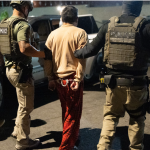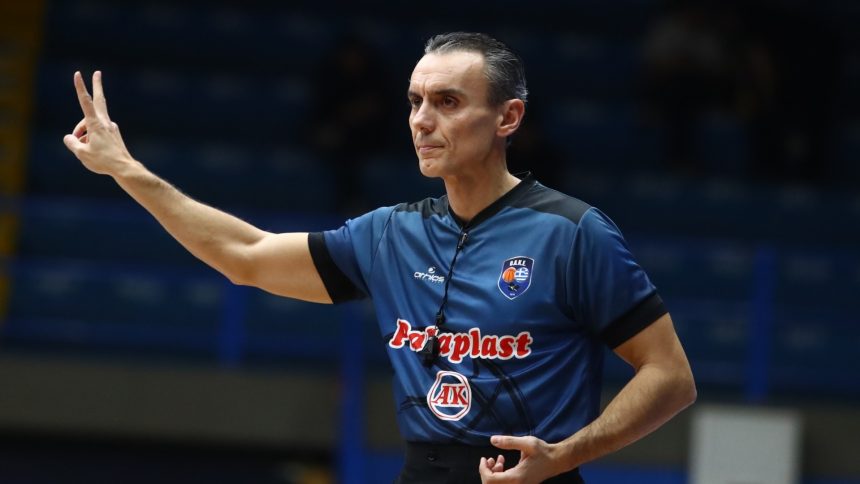
The temporary detention of former referee Petros Papapetrou was decided, by consensus, by an investigator and a prosecutor after his plea in the case of alleged match-fixing in Greek basketball . The defendant denied any involvement in illegal interference in games and presented evidence which, as he claims, documents the legal origin of the approximately 820,000 euros in cash that were located and seized at his residence.
The apology process was completed on Friday, October 23 , after a long examination. According to ERT, it lasted almost nine hours , while the former referee submitted a multi-page memorandum with his positions. The focus was on both the large sum of money and the witness’s complaints about specific meetings during which he was allegedly bribed.
For the origin of the money, Papapetrou cited his financial history over a 25-year period , providing data for the period from 2001 to 2026. According to his defense, the total income he presented reached 1.5 million euros and came from his arbitration fees, his work at the forestry department and family sources of income.
His main explanation was that the seized cash was savings of many years . He claimed that he lives in a privately owned house in Katerini , has limited expenses and chose to keep part of his money at home. According to his version, the amount was accumulated gradually and can be justified by the financial data he submitted.
The defense is therefore attempting to link the discovery of the cash to legitimate professional earnings and family income . These are allegations that are subject to judicial evaluation together with the documents that accompany them. The invocation of total income and the documentation of the origin of a specific cash reserve are related, but distinct, issues of investigation.
In addition to the financial explanations, the defendant responded to the allegations of a specific witness, according to which he was bribed four times in the same number of meetings . The former referee categorically rejected these reports and questioned the credibility of the complainant.
In particular, for two of the four alleged meetings , he claimed to have provided evidence that places him elsewhere during the time in question. For the other two, he also denied any illegal transaction or involvement. This position is a central part of his defense, as it is directed against the description of specific incidents and not just against a general accusation.
The assessment of these allegations will require consideration of the evidence presented with the content of the depositions and the rest of the case file. The questioning of the credibility of the witness is a position of the accused and does not constitute a foregone conclusion. Accordingly, the allegations of bribery remain the subject of criminal investigation.
After the conclusion of the proceedings, defense attorney Orestis Georgiadis , a lawyer from Thessaloniki, reiterated that his client denies any involvement in the match-fixing case. He described the indictment as “fragile” and argued that documents were presented regarding the legal origin of the couple’s income.
In his statements, the lawyer referred to professional activity, family income and real estate purchases as sources of the money. His public position moved in the same line as the apology, seeking to disassociate the possession of the large sum from the alleged acts.
After the apology, the investigator and the prosecutor agreed to the pre-trial detention of the former referee . The information that has been made public does not reveal the full reasoning behind the decision. Therefore, the pre-trial detention cannot be attributed with certainty solely to the presence of the cash or to the evaluation of an individual defense claim.
The development is an important milestone in the judicial investigation of the case, with attention now turning to the examination of the financial data and the alleged meetings. The temporary detention does not constitute a conviction , while Petros Papapetrou continues to deny the charges. The final judgments on the origin of the money and his possible involvement will result from the evaluation of all the evidence.