

Two hundred and two. That’s how many Greeks in Australia have decided, by Thursday, September 24, to have a say in their homeland’s next national elections. Two hundred and two in a community built by hundreds of thousands of people, with churches, schools, clubs and a century of history. The tool that Greeks abroad have been asking for for decades now exists. The Australian diaspora, however, seems to be putting it on the shelf.
The pace is as revealing as the number. On Tuesday, September 22, there were 198 registered voters. Two days later, only four more had been added. Worldwide, 16,782 expatriates have already declared that they will vote from their place of residence. Australia, which hosts one of the largest and oldest Greek communities on the planet, accounts for just 1.2% of this total, about one in eighty.
The comparison with another community in the same country is even more telling. In the last presidential election in Turkey , over 19,000 Turkish-Australians voted. The distance from the country of origin is the same, so is the post office. The difference lies in the mobilization .
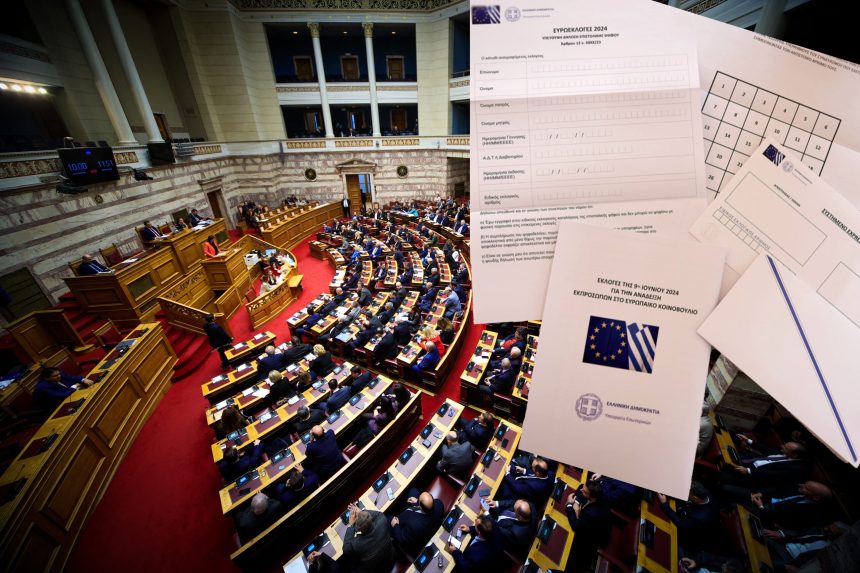
For the Greek in Melbourne or Sydney, voting was until recently almost a theoretical proposition. It required a plane ticket, time off from work and a journey of almost twenty-four hours, for a ballot paper at a ballot box in the village. Postal voting overturns this equation: the electoral material arrives at home and the vote is returned by post. Prime Minister Kyriakos Mitsotakis , answering a question from Neos Kosmos at the TIF press conference, presented the regulation as an achievement for the Greek diaspora. The paradox is that precisely where distance was the greatest obstacle, the response remains so low. The problem, therefore, was not only practical.
It is not fair, however, to measure the Greekness of the community with just one number. The Greek community in Australia now consists mainly of the second and third generations . Many speak Greek, go to church and visit their parents’ village, without ever having acquired Greek citizenship . Without citizenship there is no right to vote, and a large part of the community is effectively left out of the process. Even so, the 202 registrations are far from the number of Greek citizens living in Australia. This also opens up a parallel issue: the ease of acquiring citizenship for the younger generations is also a prerequisite for meaningful participation.
Presence at the ballot box carries weight. Parties and governments take into account those who vote. A community that appears en masse on the lists becomes visible as an electorate and not just as an emotional affair. A community that is easily absent is relegated to the background. The demands of Greeks in Australia are well known: better consular services , strengthening Greek-language education , simpler citizenship procedures, preservation of cultural identity and more substantial ties with Greece. Voting does not guarantee that they will be satisfied. But it provides an institutional way to put them forward, beyond anniversaries and national holidays.
The procedure is simple. The application is made electronically on the Ministry of Interior’s platform, apodimoi.ypes.gov.gr , without visiting a consulate. Identification is done with Taxisnet codes or with the details of the Greek passport. The interested party can choose to vote by mail, stating the address where the material will be sent. Alternatively, they can vote in person at a polling station abroad or keep both options: in-person voting if a station operates in their area, otherwise postal voting. The deadlines and conditions are announced on the official platform, and it is advisable to register early , before the election announcement.
Information, however, does not reach every home on its own. Here, the dense network of the community can play a decisive role: communities, brotherhoods, federations, schools and parishes . An information campaign does not have to be partisan. It is enough to explain the process, answer questions and help older people with the electronic application. An afternoon in a community hall, with a computer and someone who knows Taxisnet, can yield more registrations than those made in the entire previous week.
The decision on whether and how to vote remains a personal one. The point is that those who have the right to vote know that they do. Then 202 may prove to be a starting point, not a limit.