

A Greek warship docked at Kastelorizo was enough to reopen the chapter of controversy in the Turkish media. The TV network A Haber presented a report on the area, focusing on the geographical proximity of the island to the Turkish coast and going so far as to argue that two Greek islets “do not belong to Greece.”
In the excerpt from the show, the presenter mentioned that Kastellorizo is only 1,950 meters from the Turkish coast. “Kastellorizo is only 1,950 meters from our beach,” he noted, with his interlocutor repeating the distance and commenting that it is a distance “that can be covered by swimming .”
The presenter then turned to the presence of the missile boat on the island, asking, “So what is Greece trying to do?” His interlocutor described the situation as “ridiculous,” without further analysis.
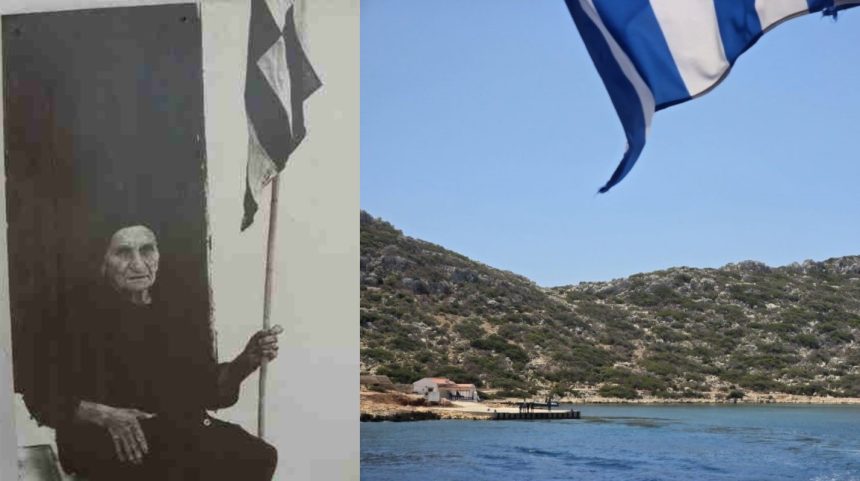
Earlier, the same network had presented a map of the area with reference to the islets of Ro and Strongyli . In the report, Ro was referred to by its Turkish name Karaanta and Strongyli as Fener Antasi , while it was claimed that the two islets do not belong to Greece.
This point is the most serious of the entire report, as it directly concerns the theory of gray zones . In fact, Ro is associated in modern Greek history with the memory of Despina Achladioti , the “Lady of Ro”, who for decades raised the Greek flag on the islet every day. The questioning of sovereignty over specific islets, while using Turkish names, is a standard tactic that Athens rejects in its entirety, considering that their status has been definitively regulated by international treaties.
The newspaper Hürriyet also moved in the same direction, with an article titled “Tension in the Aegean on the Ankara-Athens line”. According to the newspaper, the military presence on the Greek islands and the strengthening of relations between Greece and Israel are factors causing tension in the region. The article places the developments in the context of long-standing differences, focusing on the status of the islands and their militarization.
In a separate article, the same newspaper refers to the joint naval exercise of Greek and Israeli forces in the Eastern Mediterranean, presenting it as yet another indication of the strengthening defense cooperation between Athens and Tel Aviv, at a time when regional balances remain complex. Hürriyet thus connects the two developments, the Greek-Israeli cooperation and the Greek-Turkish differences, with the broader security environment.
The simultaneous appearance of the two issues in the Turkish media is not accidental. The axis of the argument remains constant. Any strengthening of the Greek defensive position, whether it is the presence of a ship on a border island or an alliance with a third country, is presented as a cause for tension. The challenge, however, does not concern the movements. It concerns sovereignty itself.