Seven dead and 34 injured, manhunt for perpetrators. “By uprooting us, they will achieve nothing,” responds the Patriarchate of Jerusalem
- Five minutes of gunfire on a funeral procession
- “They were falling to the floor covered in blood”: Those who survived describe
- Abdullah II: “We will strike with an iron fist”
- Patriarch Theophilos: “We are the children of this land”
- Churches United: “One National Family”
- Bartholomew of Rome: A blow to the coexistence of peoples
- Athens: “Greece stands firmly by Jordan’s side”
- From the UN to Beirut: Universal condemnation
- Karak relives the horror
It was Friday afternoon and in the village of Hamoud in southern Jordan, the local community was saying goodbye to one of its own. The funeral service at the Greek Orthodox Church of St. George was barely over. A few minutes later, the churchyard was filled with blood.
Jordan’s Public Security Director, Obaidullah al-Maaita , confirmed seven deaths and 34 injuries, revising upwards the initial official toll of six dead and 28 injured. Twenty-seven of the injured are in hospital. The village is about 180 kilometres south of the capital Amman.
Five minutes of gunfire on a funeral procession
According to the Public Security Directorate, the perpetrators got out of a vehicle and opened fire during the funeral procession. There were 150 to 200 people inside and around the church at the time. Most of the victims were between 50 and 70 years old.
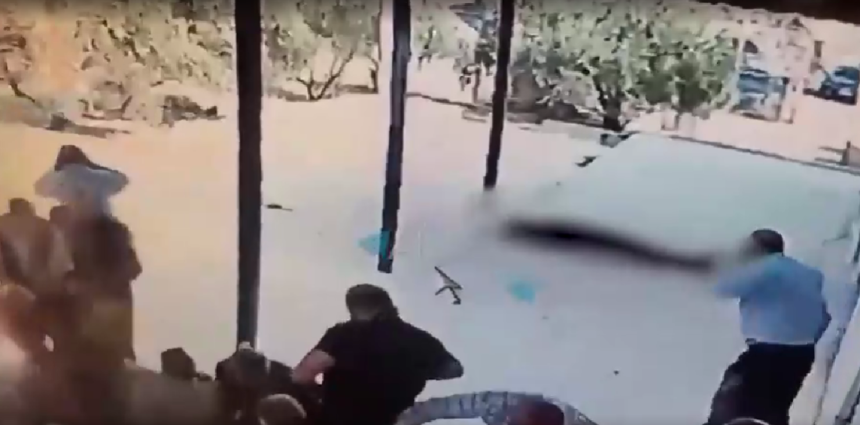
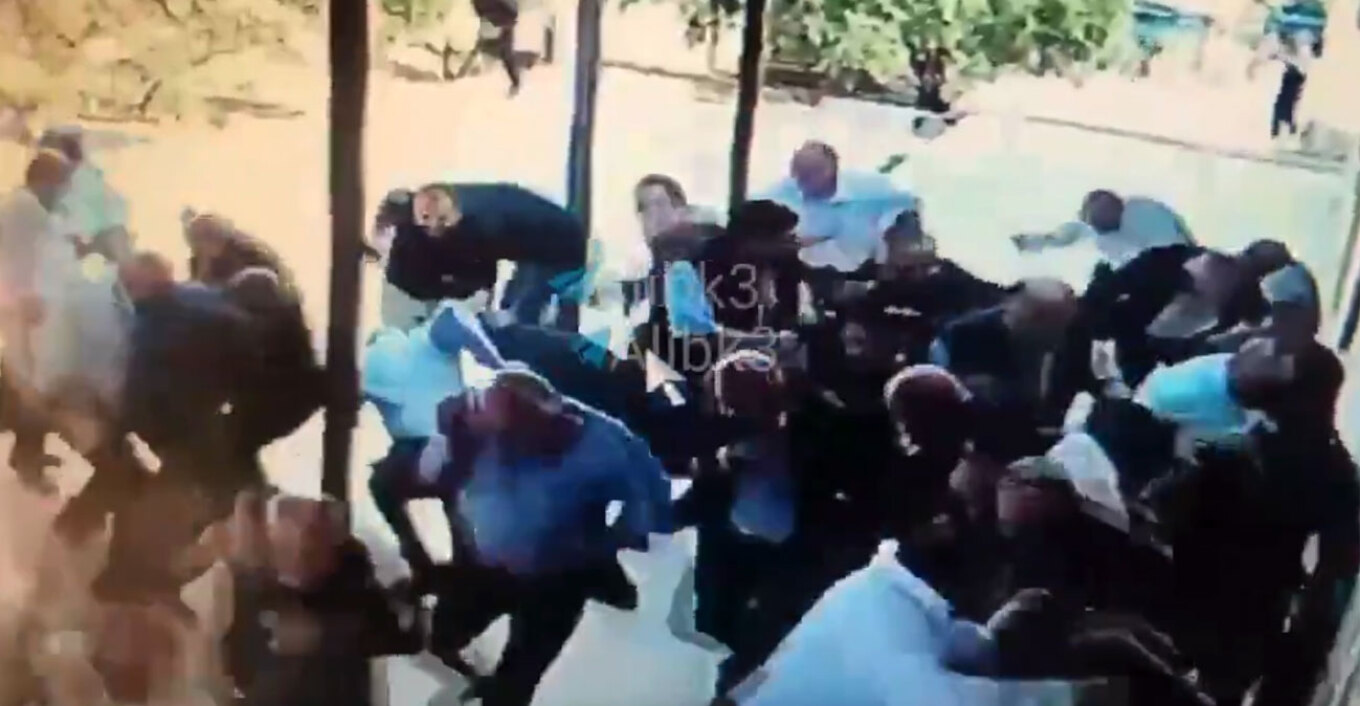
A crucial piece of evidence for investigators is footage from the temple’s security camera. The video, broadcast by state-run Al-Mamlaka TV, shows three men shooting from the sidewalk, hidden behind trees and a low wall, then running toward the entrance. Two of the gunmen were wearing civilian clothes and carrying pistols, while the third had a long-barreled gun.
An analysis of the same material by the Saudi Al Arabiya reportedly shows that one of the three had his gun jammed, resulting in him never reaching the temple or taking part in the shooting. This is an estimate that has not been officially confirmed.
As of Friday evening , no one had claimed responsibility and the gunmen had not been arrested.
“They were falling to the floor covered in blood”: Those who survived describe
The accounts of those who were there paint a picture of panic. Tamer Khalasa described to Al-Mamlaka that some people were standing outside the church when two people got out of a car and started shooting.
Haled Burkan , who attended the funeral, said there were dozens of people in the procession and that one attacker was carrying a pistol, the other a rifle. Another witness said one of the attackers had a Kalashnikov.
Another eyewitness spoke of continuous gunfire for five minutes before the attackers disappeared. Ihab Amarin saw people covered in blood collapsing on the floor.
Survivors also reported a detail that has not yet been clarified: they heard an explosion as the procession began, and immediately afterwards masked men entered the temple and opened fire for several minutes.
Abdullah II: “We will strike with an iron fist”
King Abdullah II reacted immediately. In a post, he warned that the blood of Jordanians is precious and that the state will strike with an iron fist anyone who turns against the country. He arrived in Karak in the afternoon, while Jordanian media videos show him visiting wounded people in the city’s government hospital.
Interior Minister Mazen al-Faraya described the attack as unprecedented and the work of a group “without any connection to humanity,” saying Jordanians had never seen anything like it before. He clarified, however, that it was too early to say whether the perpetrators were linked to known organizations inside or outside Jordan.
Prime Minister Jaafar Hassan spoke of an attack against all Jordanians, while the country’s Grand Mufti also condemned the action, underlining the tradition of coexistence between Muslims and Christians.
Indicative of the sensitivity of the case is that the Amman prosecutor imposed restrictions on the publication of investigation data . He later clarified that public discussion and condemnation of the attack are not prohibited.
Patriarch Theophilos: “We are the children of this land”
Jordan is ecclesiastically affiliated with the Greek Orthodox Patriarchate of Jerusalem , and its reaction was one of the most charged. Patriarch Theophilos III called the attack “heinous, cowardly and bloody.”
The statement, signed by the Patriarch, the members of the Holy and Sacred Synod and the hierarch representing the Patriarchate in Jordan, expresses deep sorrow for the losses and condolences to the families, the Jordanian people and the Hashemite leadership. The Patriarchate states that it is certain that the Jordanian security services will bring those responsible to justice.
The sharpest point is the response to those who, possibly, want to expel Christians from the region: if that was the aim, the attack will make them hold on to their land even tighter and take deeper roots. Christians, he notes, are children of this land and participants in its history, present and future. The announcement begins with the words of Christ “I am the resurrection and the life” and closes with a wish that God protect Jordan.
Churches United: “One National Family”
The Patriarchate’s stance was also adopted by the other churches in the region. The Latin Patriarchate of Jerusalem condemned the cowardly terrorist act in the strongest possible terms, emphasizing that Muslims and Christians in Jordan constitute a national family with a common history and a common destiny.
The Catholic organization Aid to the Church in Need , which supports the Church in Jordan, expressed solidarity particularly with the Greek Orthodox community and that it is in contact with the local Church.
Karak is no coincidence. The province, with a population of about 375,000, is home to a large Christian community. Christian Science Monitor correspondent Taylor Lack estimated that if the attack was intended to sow discord, the community would likely emerge even stronger. Across the country, Christians number about 300,000, out of a total population of 11.5 million.
Bartholomew of Rome: A blow to the coexistence of peoples
Ecumenical Patriarch Bartholomew , who is in Rome, called Patriarch Theophilos of Jerusalem on Friday evening and categorically condemned the attack. As he pointed out, every terrorist act is essentially directed against the peaceful coexistence of peoples, religions and cultures, something vital especially for the troubled Middle East.
Athens: “Greece stands firmly by Jordan’s side”
The Greek Ministry of Foreign Affairs condemned “unequivocally the heinous terrorist attack” on the Church of St. George, expressing condolences to the families of the victims, solidarity with the Jordanian people and wishes for a speedy recovery for the injured.
This was followed by a post by Prime Minister Kyriakos Mitsotakis , who described the attacks on innocents and places of worship as an insult to common humanity. “Greece stands firmly by Jordan’s side,” he wrote, calling for the elimination of fanaticism in the Middle East and worldwide.
PASOK president Nikos Androulakis also expressed condemnation, who contacted the Patriarch of Jerusalem.
From the UN to Beirut: Universal condemnation
UN Secretary-General Antonio Guterres strongly condemned the attack. His spokesman Stephane Dujarric noted that a strike not only on a place of worship but also during a funeral is particularly heinous.
The US Embassy in Amman expressed its deepest condolences to the victims and survivors on behalf of the American people. The European Union , the Arab League , as well as the United Arab Emirates, Bahrain, Syria and Iraq also condemned the attack.
Lebanese President Joseph Aoun , the only Christian head of state in the Arab world, called it a “heinous terrorist attack,” while Palestinian Authority Vice President Hussein al-Sheikh reiterated his rejection of any form of violence against innocent people and places of worship.
Karak relives the horror
Attacks on places of worship in Jordan are extremely rare . But Karak has seen its share of terror: in 2016, ISIS militants barricaded themselves in a Crusader-era castle and killed 10 people, including police officers and a Canadian tourist. No connection between the two incidents has been established.
The strike comes at an already tense time for the kingdom, which has been hit by Iranian attacks since the US and Israel launched strikes against Iran in February. Political analyst Xavier Abu Eid said the attack completely contradicts the message Jordan wants to send to the world as the custodian of Jerusalem’s holy sites.
In Hamoud, tonight, the community mourns seven of its own people. The question of who is behind the massacre remains open.