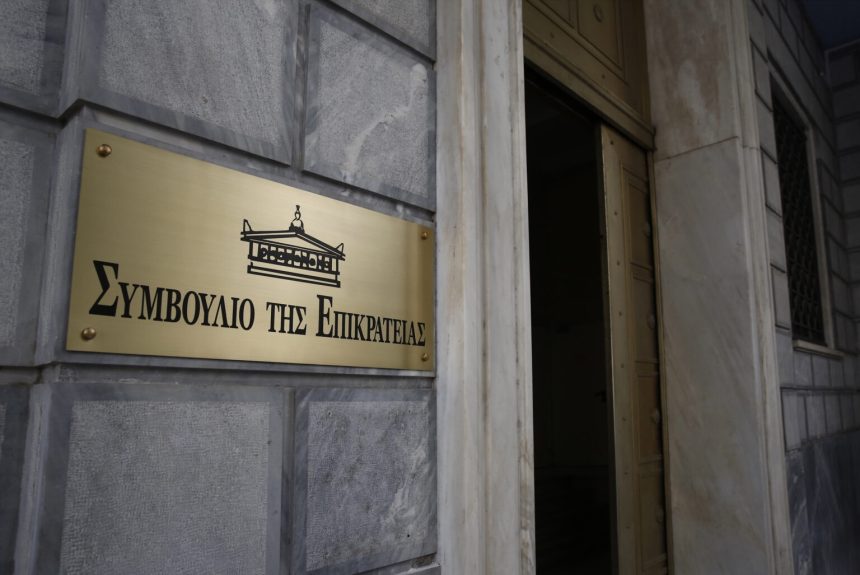
The case of the acting Deputy Prosecutor of the Supreme Court Vasilis Floridis is being forwarded to the President of the Council of State, Michalis Pikramenos , in order to conduct a disciplinary investigation into his public intervention into corruption phenomena in the judiciary. The reason for this was his article entitled “Vein of Corruption” , in which he made serious allegations about the handling of a specific criminal case in which he had participated in his official capacity.
The transmission is made, according to journalistic information, by the Deputy Minister of Justice Ioannis Bougas . The procedure follows this path because the Minister of Justice Giorgos Floridis , who has the authority to initiate disciplinary proceedings against senior judicial and prosecutorial officials, is the brother of the audited deputy prosecutor . The family relationship is, therefore, a crucial element for the institutional handling of the file.
According to the same information, after receiving the case, the President of the Council of State is expected to appoint a vice-president of the court to conduct the investigation . The process will result in a conclusive report, in which the data collected will be evaluated. This is an investigation stage and not an already established disciplinary offense or imposition of a sanction.
In the controversial article, Vasilis Floridis made allegations of corruption by judicial and prosecutorial officials , linking his reports to the handling of a case that involved, among other things, a relative of a serving minister . According to his version, there was fabrication of evidence and unfounded referral of individuals , including high-ranking police officers. These allegations constitute complaints by the deputy prosecutor and cannot be presented as proven incidents.
The seriousness of the intervention is directly linked to his status. The author of the article is a current senior prosecutor and had handled the specific case at the Supreme Court. His public statement thus brought to the fore issues concerning both the substance of the complaints and the limits of public intervention by judicial officers in cases in which they have official involvement.
The publication provoked reactions from judicial associations and bar associations , as well as from the leadership of the Supreme Court and the Prosecutor’s Office . According to the relevant reports, the criticism focused on the public position of the deputy prosecutor on a pending case that he had handled himself . This is the element that gives the confrontation particular institutional importance.
Vasilis Floridis, for his part, defends his intervention. In statements carried in the court report, he claims that his aim was to publicly highlight corruption phenomena , without naming specific judges or prosecutors. This position constitutes his response to the criticisms and is expected to be evaluated together with the content and context of the publication.
At the same time, according to the information made public, he has competently requested the disciplinary control of judicial and prosecutorial officers who participated in the handling of the case. Two distinct issues therefore arise. One concerns his own public behavior and the other the substance of the allegations he has made about the actions of other officers.
This distinction is essential for understanding the case. The disciplinary review of public intervention does not in itself prove that the allegations are untrue . Similarly, the fact that the allegations come from a senior prosecutor does not replace the need to document them. Each element requires specific evidence and an independent assessment.
The case touches on a sensitive area for the functioning of the judiciary. The allegations of fabrication of evidence and unjustified referrals are extremely serious and require substantial examination. At the same time, their public formulation by an official who participated in the handling of a pending case raises questions about his official attitude and the impact of the intervention on the judicial process.
The progress of the investigation will be judged by the content of the article, the service context and the elements of the file . Until its completion, no final disciplinary conclusion has been announced. The aim is to provide documented answers both for the public intervention of Vasilis Floridis and, through the competent procedures, for the serious complaints that were its starting point.