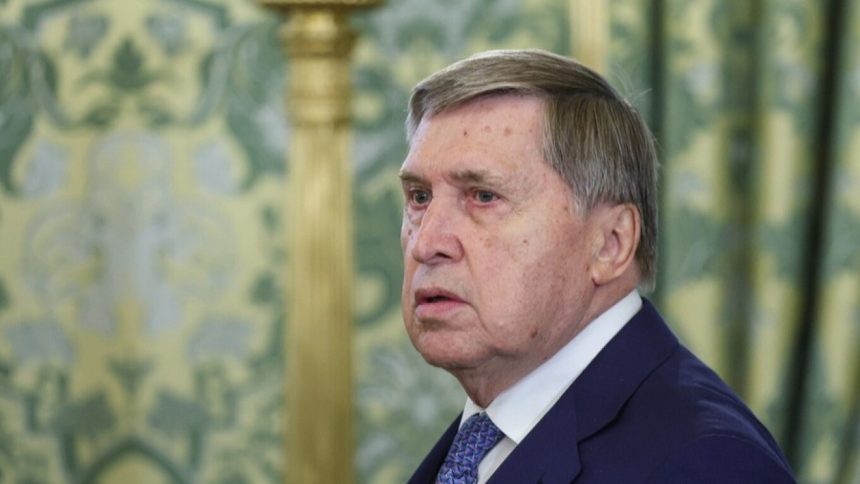
A new window of opportunity for restarting the diplomatic process in Ukraine is forming after Vladimir Putin ‘s meeting with the United States’ special envoy Steve Wittkow , but no final agreement has been announced by all sides for the next round of negotiations. According to the Kremlin’s foreign policy advisor Yuri Ushakov , the Russian president said on Wednesday, October 21, that Moscow is in principle willing to resume talks with Ukraine and the United States in November , aimed at ending the war.
The Russian side’s wording leaves open the prospect of returning to the table, but also substantial issues regarding the holding of the meeting. The “in principle” reflects an intention to participate and does not in itself constitute either an agreed timetable or convergence on the main differences. If the new round takes place, a tripartite format will be reactivated which, according to available information, has not met since February .
Abu Dhabi is being considered as a possible venue, with a timeframe of around mid-November , Ushakov told Vesti TV. The reference to a specific location and time period gives more concrete form to the diplomatic perspective, but it remains a proposal under discussion. Final confirmation of the participation of the parties and the agenda will be the next substantive step.
Moscow is also trying to define the central axis of the negotiations. According to Ushakov, the new round should focus on building a security system for Russia and Ukraine after the end of the conflict . This is a broad formulation, which moves the discussion from an immediate cessation of hostilities to the conditions that could support a post-war settlement.
At the level of political analysis, this choice shows that the Kremlin wishes to include Russian security requirements in the same negotiating horizon as the corresponding needs of Ukraine. However, no specific terms of this system have been presented , nor does it appear that Kiev and Washington have accepted the Russian description of it. The gap between a general principle and implementable commitments remains one of the key issues that negotiators will have to face.
Steve Witkoff briefed Putin on the content of his contacts the previous day in Oslo , where he met with Ukrainian President Volodymyr Zelensky , the Prime Minister of Norway, and the President of Finland. The sequence of meetings highlights the role of the American envoy in conveying proposals and seeking margins of understanding between the parties.
The Kremlin’s assessment of what was conveyed from Oslo was restrained. Ushakov said that Vitkov presented new approaches and new points in the positions of the Europeans and Kiev , but argued that they contained limited elements useful for resolving the conflict. This is an assessment of the Russian side , as the detailed content of the proposals was not made public in the briefing.
This dual stance is important. Moscow acknowledges that there are differences in the approaches of its interlocutors, without declaring itself satisfied with them. As a negotiating message, this stance can be interpreted as an attempt to maintain dialogue while simultaneously pressuring for further movements. It is not, however, an indication that the substantive disagreements have already been bridged .
The meeting between Putin and Vitkov, which lasted almost three hours , had a broader agenda. According to Ushakov, the implementation of the October 9 agreement between Vladimir Putin and Donald Trump on the supplies of Russian diesel to the American and international markets was also discussed. The energy issue was discussed in parallel with the Ukrainian issue, without the briefing indicating a specific connection of exchanges between the two issues.
The parallel presence of energy and war in the same meeting reflects the breadth of US-Russian contacts. For the Trump administration, the Vitkov channel offers the possibility of direct discussion with the Russian leadership on more than one front. Its effectiveness in Ukraine, however, will be judged by specific agreements and their implementation.
The crisis in Iran was also on the table. Putin, during his advisor’s briefing, argued that the margins of diplomacy have not been exhausted and that reaching agreements with Tehran remains both possible and necessary. At the same time, he referred to Iran as Russia’s strategic partner , while Moscow reiterated its readiness to contribute to the search for political and diplomatic solutions.
The next critical development for the Ukrainian side will be the transformation of the declared intention into a confirmed meeting with a clear objective . Until then, the prospect of November offers a possibility of resuming the dialogue, but does not prejudge its outcome. The essential question remains whether the new contacts can lead to commitments that will be accepted by the parties involved and will create real conditions for ending the war.