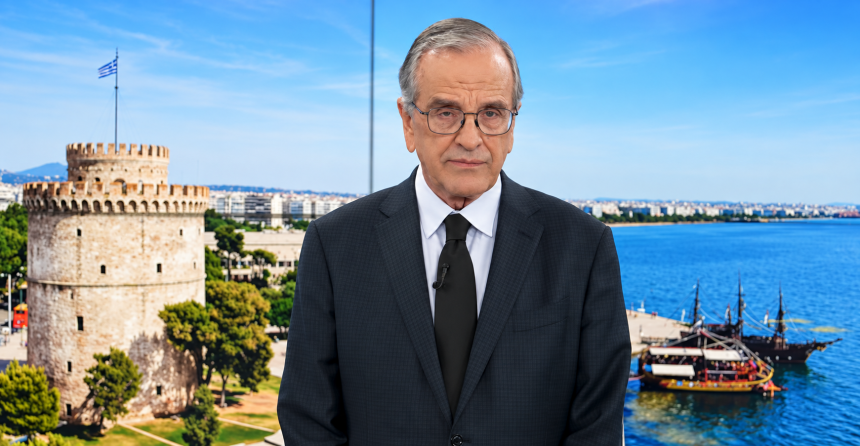
Two events on the same day, two different fronts, one common reading. Former Prime Minister Antonis Samaras speaks of a “double blow” , referring on the one hand to Commission President Ursula von der Leyen and on the other hand to the agreement to exchange relics between Greece and Bulgaria.
Regarding the President of the Commission, Mr. Samaras wondered which Europe she represents, commenting that she expressed admiration “for the so-called Macedonian language.” Regarding the agreement with Bulgaria , he argued that he himself as Prime Minister had demanded the return of all stolen relics, while today, as he said, “we are trumpeting a retreat with celebrations.”
In detail, his statement is as follows.
“We received a double blow today. Mrs. von der Leyen, who I don’t know which Europe she represents, expressed admiration for the so-called Macedonian language and Macedonian culture of Skopje.
Things have gotten much worse since the Prespa fiasco and we are watching silently.
At the same time, Bulgaria welcomed the bones of Samuel with the most formal honors, which for them is like the bones of Alexander the Great coming to Greece.
It was the national desire of the Bulgarians for over 100 years. And look what we got, only 48 of the thousands of our sacred relics stolen by the Bulgarians from Northern Greece during the First World War.
As Prime Minister, I had demanded that all the stolen goods be returned to us and, unfortunately, today we are trumpeting a retreat with celebrations.”
The former prime minister’s argument is structured around an analogy that attempts to make visible the inequality of the transaction. On the one hand, the bones of Samuel , charged with centuries of symbolism for the Bulgarian national narrative. On the other, 48 relics out of the thousands that, according to him, were removed from Northern Greece during the First World War . The comparison with Alexander the Great is used precisely to attribute to the Greek public the size of the symbolic gain of the other side.
As for von der Leyen’s part, the issue at stake is an issue that has remained open since the Prespa Agreement , that of the name of the language and cultural identity. Mr. Samaras, a staunch critic of the agreement, argues that the situation has worsened compared to what was foreseen in the original text, with the Greek side not reacting.
The two extremes, although they concern different issues, converge on the same political conclusion that the former prime minister is attempting to formulate: that the country is conceding symbolic territory to two fronts simultaneously, without a corresponding return.