

RAM is becoming a key cost factor in PCs, servers, and cloud infrastructure — with reasons, pricing data, and broad market implications.
What’s happening with RAM prices?
DRAM and DDR5 memory prices have skyrocketed in recent months, with many reports showing significant price increases by 2025:
- The global memory shortage is due to a production shift from conventional DDR4/DDR5 memory to high-bandwidth memory (HBM) used in artificial intelligence (AI) applications and data centers, limiting supply for the PC and server market.
- DRAM prices have increased by 60% or more in many cases, due to pressure from cloud providers and hyperscalers that absorb much of the production.
- Analyses show that the current price crisis is not temporary, but a structural change in the memory market with high prices likely to persist at least until 2027–2028.
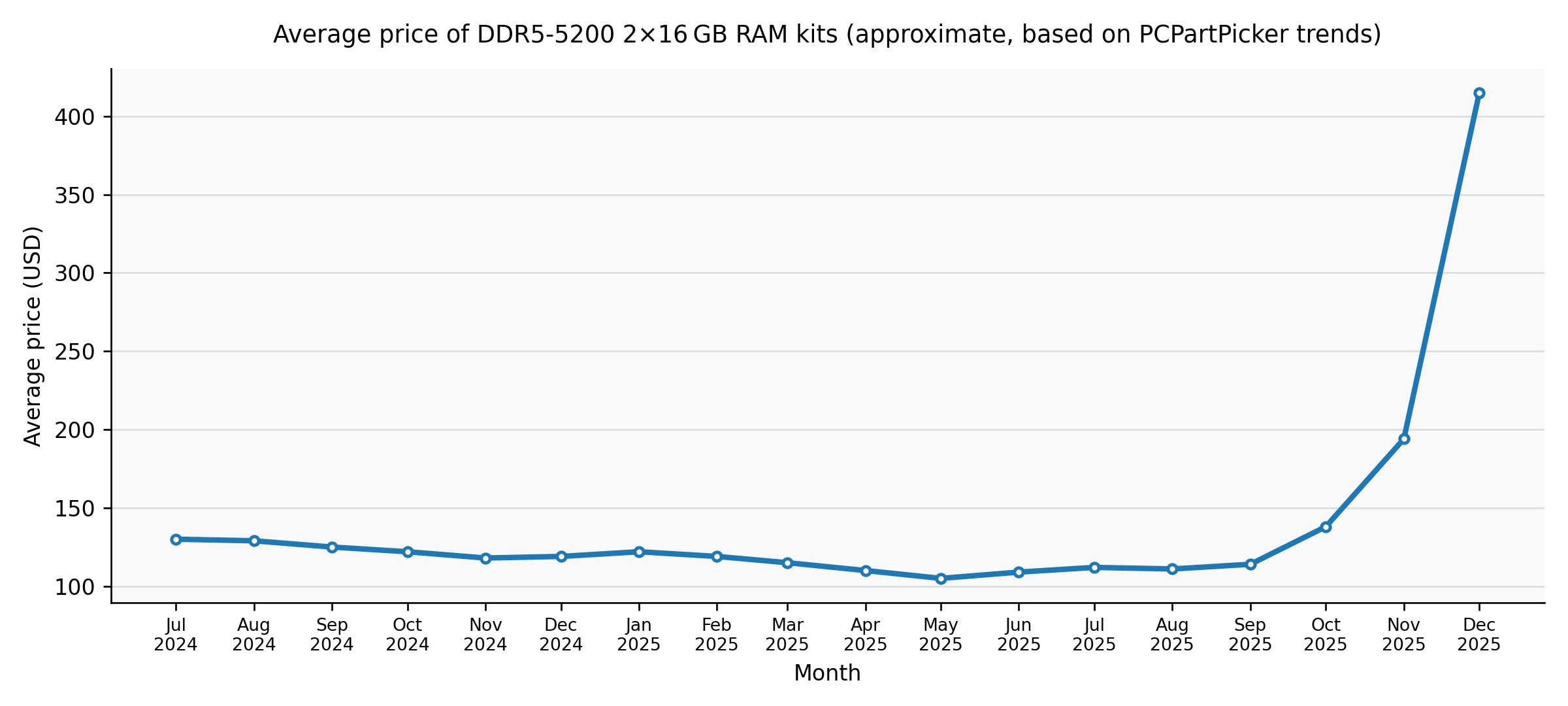
Overall, the data shows increases that, in many cases, have multiplied compared to 2024–2025 prices while spot prices and contracts remain at historical highs.
Prices a few months ago vs now (indicative)
| Product category | Price before (2024–2025) | Price now (2026) | Change |
|---|---|---|---|
| DDR5 16GB Module | ~ $70-$90 | > $150 | +~100%+ |
| DDR5 32GB Kit | ~ $140-$180 | > $300-500 | ~ +100/150%+ |
| Server DDR5 RDIMM | ~ baseline | +~50%+ | Significant increase |
The above is indicative based on market analyses that show a continuous rise in prices for both consumer and server memory.
Why are prices rising so much?
- AI and data centers are consuming memory
Large cloud and technology companies prefer and secure a larger amount of high-performance memory — leaving less availability for the PC and server market. - Production is headed towards HBM/AI memories
DRAM manufacturers (Samsung, SK Hynix, Micron) are shifting production towards HBM and high-performance memories for AI workloads, reducing production of basic DRAM types. - Hyperscalers absorb much of the production
Estimates indicate that large data centers may absorb up to 70% of total DRAM production by 2026. - Limited production capacity and new facilities are slow
New production lines take years to become fully operational, keeping supply tighter than demand.
Market impact — wider implications
Cloud & Data Centers
Cloud providers like AWS, Google Cloud, and Microsoft Azure face higher infrastructure costs, as memory prices are a significant part of server builds and expansion costs. This leads to either higher CAPEX/OPEX or cost passing on to customers.
According to analyses, even the increase in data center spending may reflect more accurately memory prices than actual infrastructure expansion.
PCs, Smartphones & Consumer Devices
The DRAM shortage and production shift also affect the end consumer:
- The cost of manufacturing products is increasing, with possible 15–20% price increases in final electronics products (e.g. laptops, smartphones).
- IDC reports that memory shortages could reduce PC market volume by up to ~9% by the end of 2026.
What it means in practice for users & businesses
- PC Consumers: RAM prices are high and will likely remain so until production increases or pressure from AI/Cloud demand eases.
- Cloud & Enterprise: Higher infrastructure costs and possible increased cloud service bills in the coming quarters.
- IT Buyers & OEMs: The need for purchasing strategies and logistics management is increasing to cope with high prices.
Conclusion
The 2025–2026 RAM price increase is not just a temporary price “wave,” but the result of structural changes in production and demand. Pressure from AI data centers, the shift to HBM, and reduced availability for consumer devices have created a much more volatile pricing environment that is impacting the price of PC hardware, cloud services, and technology infrastructure worldwide.

