
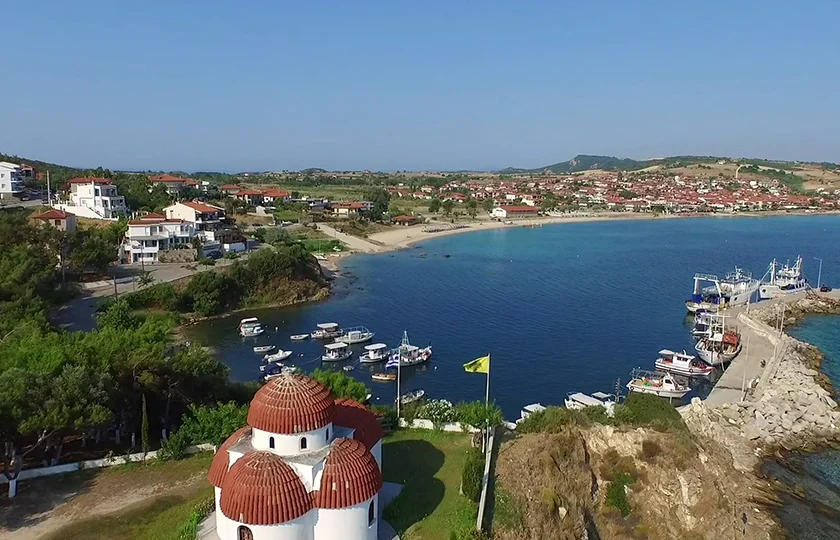
The Xerxes Canal is one of the lesser-known but historically documented engineering works of the late Archaic and early Classical periods. It was constructed in the early 5th century BC, at the northern tip of Chalkidiki, between the present-day villages of Nea Roda and Tripiti , in an area that was at the center of the strategic plans of the Achaemenid Empire .
The excavation of the canal, approximately two kilometers long, intervenes in a difficult section of the isthmus of the Athos peninsula , which had become infamous for the sinking of Mardonius’ fleet in 492 BC — a disaster that Herodotus preserves as decisive for Xerxes’ subsequent choices.
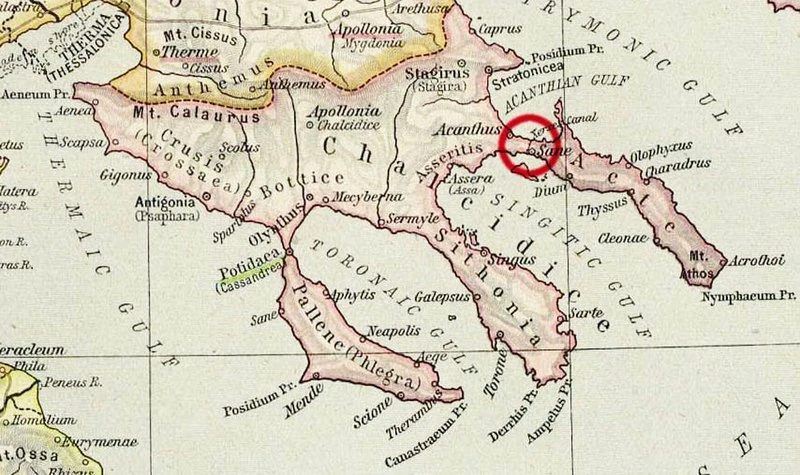
The work tells the story of the Persian government’s attempt to overcome the natural obstacles that had proved fatal to previous ventures. Sources speak of the mobilization of thousands of workers from various nations of the empire, under the supervision of engineers who had developed particularly advanced excavation methods. The canal functioned as an artificial sea passage , allowing Persian ships to avoid the dangerous circumnavigation of Mount Athos. Although historians have extensively debated the feasibility and actual timing of its use, the fact of its construction is evidence of the technological proficiency and logistical capacity of the Persian monarchy.
For many centuries the actual extent of the project remained a matter of dispute. Despite Herodotus’ descriptions, some modern scholars have believed that the canal never existed and that it was a diolkos , i.e. a passage for transporting ships over land.
This debate was radically revised in 2008 , when a research team of British and Greek experts used geomorphological studies , drilling and 3D mapping to restore the precise topography of the isthmus. The study confirmed the morphology of the trench and revealed that traces of the canal were still visible under layers of later deposits. The researchers concluded that the canal was real, fully functional and part of the logic of Persian military preparation.
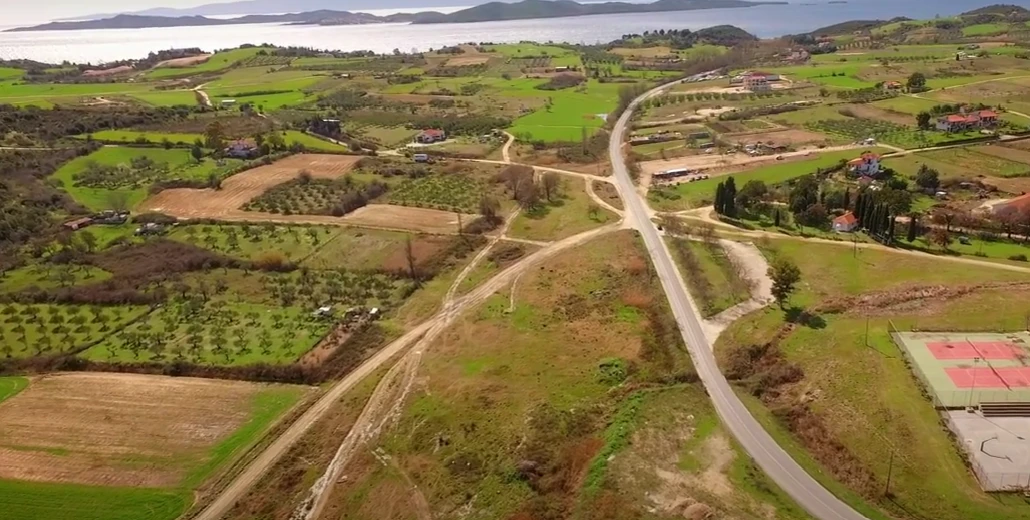
The canal, however, was probably used for a limited period of time . After the completion of Xerxes’ campaign and the gradual collapse of Persian dominance in the Aegean, the project was abandoned, naturally filled in and gradually integrated into the landscape. Subsequent geological evolution covered the original embankments, leaving behind a distinctive valley, which for centuries gave food for hypotheses and interpretations.
The restoration of the monument to public debate in recent years is part of a more comprehensive effort to highlight lesser-known aspects of the ancient history of Macedonia and Halkidiki . Modern research is no longer limited to the rescue and documentation of the ancient trench, but seeks to transform it into a cultural reference point , a place where archaeological science, historical memory and the experience of the modern visitor will coexist.
The Municipality of Aristotelis, in collaboration with the competent archaeological services, is planning interventions that will allow access to and understanding of the area, such as the creation of thematic routes, the revival of ancient cultures and the development of interpretive centers .
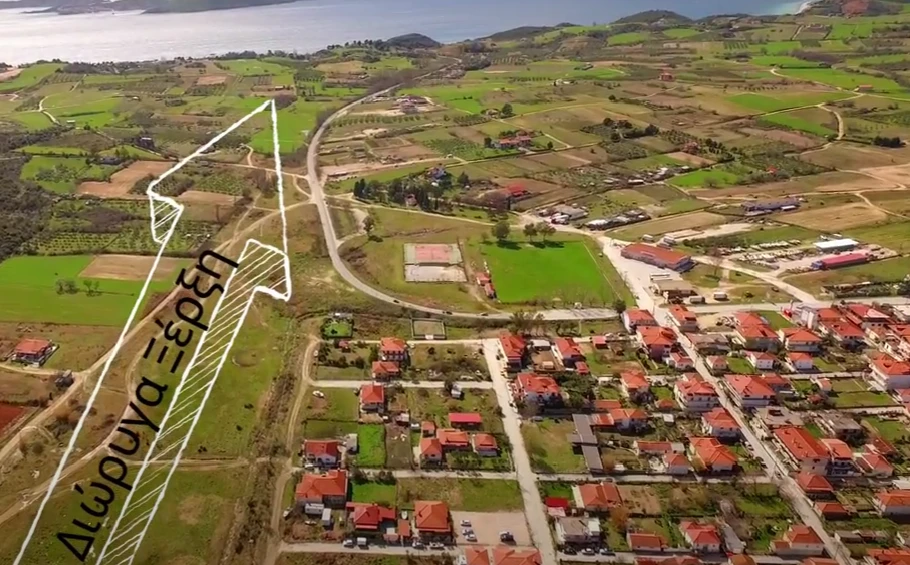
The recent outreach of Iran and the upcoming visit of a high-ranking Iranian delegation reveal a new dimension to the historiography of the canal. The monument is now associated not only with the ancient Persian state machine , but also with the modern effort to recognize common historical elements between two civilizations that once faced each other on the battlefield. The Iranian Ministry of Culture’s engagement with the history of the canal is not simply a diplomatic move; it is a step towards the recognition of a timeless cultural heritage , which can function as a field of mutual understanding.
On a historiographical level, the Xerxes Canal goes beyond the description of a technical project. It is part of the broader context of Achaemenid administration , resource management, population mobilization and strategic use of the landscape. It is directly linked to the image that the Persians sought to project: an image of an all-powerful empire , capable of modifying space according to its needs and imposing its presence from Asia Minor to the coasts of Macedonia.
The modern promotion of the canal is not simply a tourist or development project. It is an attempt to reintegrate the monument into the historical narrative of the region, to connect ancient technical knowledge with current geopolitical and cultural processes, and to give new life to a project that remained, for centuries, buried in material but not historical memory .