
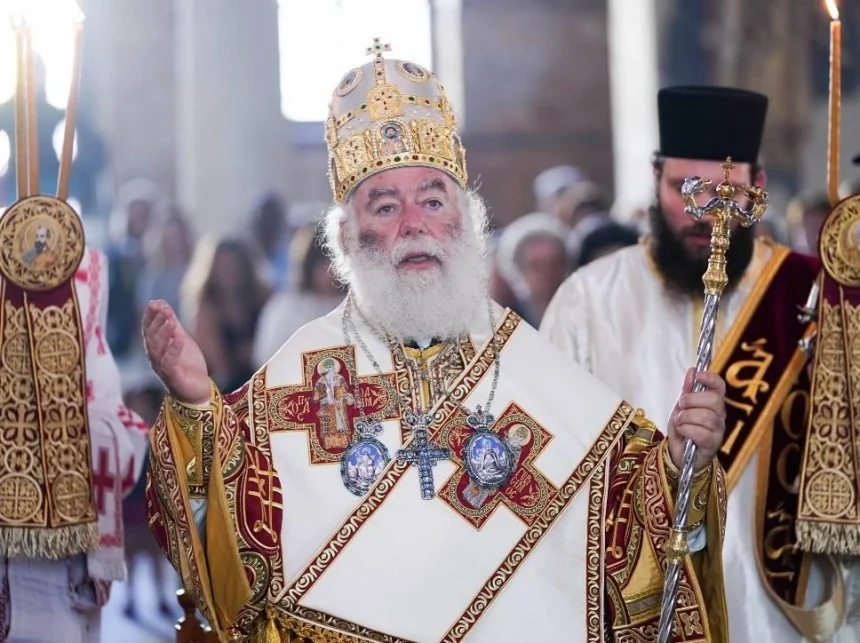
In a moment of intense symbolism and heavy theological burden, Patriarch Theodore II of Alexandria chose to respond not with confrontation but with forgiveness , while sending a clear message to those who, as he said, “attempted to hurt the Patriarchate and sow doubt.”
His statement comes at a time when the historic Patriarchate of Alexandria is at the center of pressures, internal tensions, and geo-ecclesiastical realignments.
” I forgive those who attempted to hurt the Patriarchate and sow doubt, ” he stressed, underlining that the Church does not operate in terms of retaliation, but in a spirit of ministry and responsibility. His phrase was not simply a personal statement. It was a public intervention with recipients inside and outside church circles.
The Patriarchate of Alexandria, with a centuries-old history and apostolic succession dating back to the Evangelist Mark , is one of the most important pillars of Orthodoxy in Africa. In recent years, however, it has faced challenges that test its unity and spiritual radiance , especially in areas where missionary activities are developing dynamically.
The reference to “planting doubt” is interpreted as a sharp jab at those who, through public interventions or behind-the-scenes moves, attempted to question the regularity, choices, or pastoral direction of the Patriarchal Authority. However, the Patriarch chose to respond with spiritual transcendence , proposing forgiveness as an act of strength and not weakness.
His message embodies a double dimension: on the one hand, the effort to maintain the unity of the ecclesiastical body , on the other, the reminder that the institutions of Orthodoxy do not operate with logics of internal decay or personal strategies. In an era where geopolitical and ecclesiastical balances are changing, this position acquires particular weight.
The stance of the Patriarch of Alexandria sends a message that transcends the narrow limits of the current situation: that historical continuity and spiritual responsibility cannot be undermined by current confrontations. And that, ultimately, the answer to the wounds is not conflict, but stability and faith in the institutional and apostolic role of the Patriarchate.