

The US government is working on plans for new military strikes against Iran , according to reports by Axios and CBS News , while international diplomatic efforts to de-escalate are in full swing. The contradiction is not accidental. It reflects exactly the logic with which Washington is handling this crisis. Diplomacy and military pressure at the same time , with the scales tipping depending on Tehran’s moves.
The loudest signal came not from an official announcement, but from a decision: Donald Trump canceled all personal commitments for the weekend . He will not attend his son’s wedding. He did not go to his private golf club. He remained in the White House, citing ” government business ,” a phrase that in such circumstances does not leave much room for optimistic interpretations.
CBS News confirmed that preparations are underway for possible new bombings against Iran over the weekend, while Axios revealed that Trump has convened an emergency meeting with his close advisers on the subject of war with the Islamic Republic.
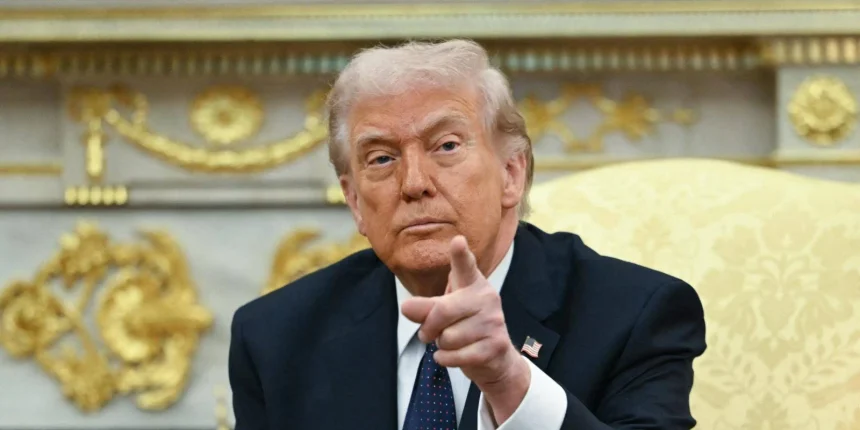
The US president himself left little room for doubt about his intentions. Speaking at an event in Suffern, New York , he declared with his characteristic categoricalness: “We stopped them. They are never going to get nuclear weapons.” He added: “We will end this soon. It will end soon.” The phrase sounded both as a promise and a warning.
In this tense climate, diplomacy has not given up. The head of the Pakistani army , a country that acts as a key mediator between the two sides, arrived in Tehran for talks with the Iranian leadership. His presence is neither accidental nor symbolic. Pakistan maintains open channels of communication with both Washington and Tehran and is currently one of the few actors that can convey messages from both sides without losing its credibility.
The context is not new, but the tension is escalating. Since the fragile ceasefire declared on April 8 , Trump has sent repeated messages about the possibility of a resumption of the war. He has threatened new military operations, spoken of a diplomatic solution, announced ceasefires and talked about “finishing touches” on military targets . As of late Friday night, a final decision on a new attack had not been made, but everything indicates that this decision could come at any time.
The US-Iran crisis is no longer a regional conflict. It has already sparked global energy uncertainty , disrupted Gulf shipping lanes and threatened to become the most serious escalation in the Middle East in decades. And the world is watching with bated breath to see what the US president, who has chosen to spend his weekend in the White House, will decide.
When Trump cancels his attendance at his son’s wedding, something major is brewing.