Seventeen minutes may seem insignificant in everyday life. In the Spanish train tragedy, however, they became the time that separates a normal journey from an irreparable disaster. There was time between the command to restart a train and its collision with a stopped train. That is precisely what makes the question so painful. Why was it not used to save the people inside the carriages?
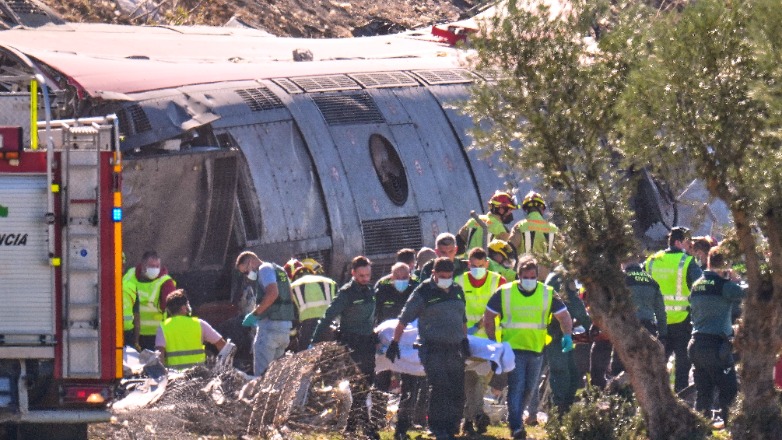
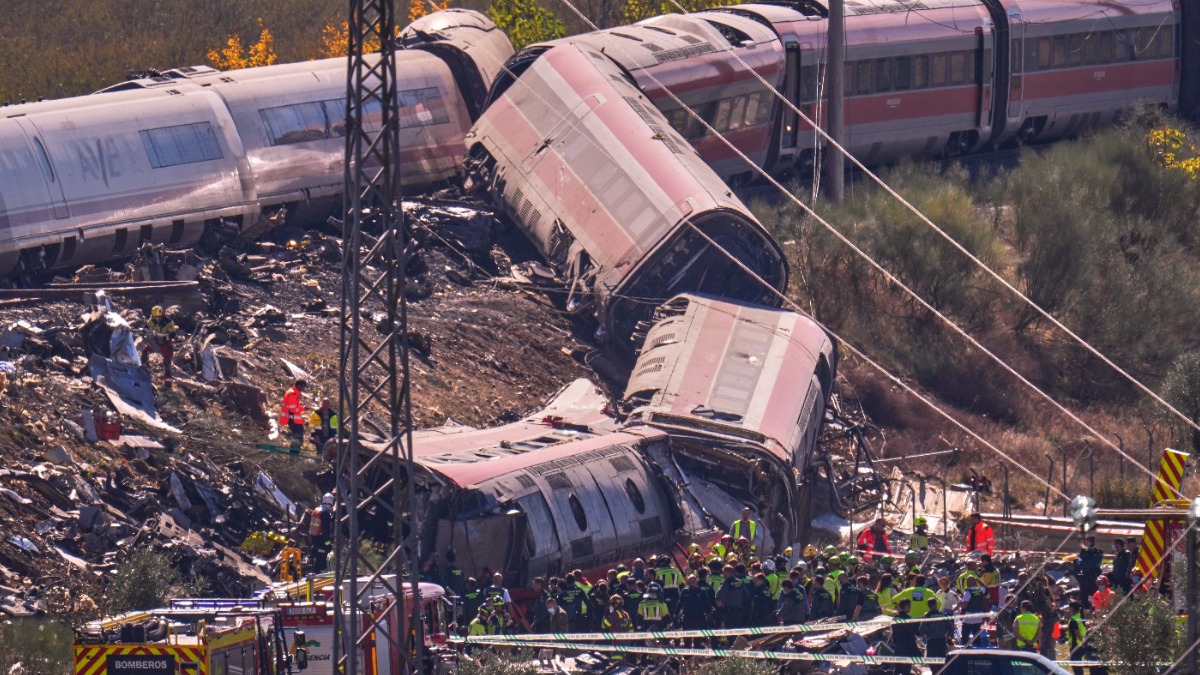
The collision in the Toledo area, on the high-speed line connecting Madrid with Andalusia, left at least 68 dead , according to the confirmed toll on October 28, and more than a hundred injured. A total of 544 people were on board the two trains, 397 on the Renfe AVE and 147 on the Iryo train. Behind these numbers are families who were waiting for an arrival and found themselves searching for information among hospitals, telephone lines and announcements from the authorities.
The first reconstruction of the events describes a sequence that requires close examination. At around 08.30 , a problem in the LZB system led to the automatic immobilisation of the trains on the section in question. The initial reaction was protective. The trains stopped. However, around six minutes later, the control centre gave the order to resume traffic, while the problem had not been rectified. The AVE moved again, while the Iryo remained immobilised in front of it. The collision occurred at around 08.53 .
This sequence shows why the investigation cannot be limited to the finding of a technical fault. The fault explains the initial traffic disruption. It does not in itself explain the subsequent collision. It must be clarified what information each party involved had, what order was given, how it was transmitted, and what safety controls should have been activated when automatic protection was not available.
Accuracy in the description is also needed. The speed of the AVE at the time of the impact had not yet been determined in the first official explanations. The reference to 200 kilometers per hour referred to the speed that could be developed on the specific section, not a confirmed measurement of the collision. The crucial element is that, according to the initial presentation by the Ministry of Transport, normal traffic was allowed in conditions that required restrictions and increased caution.
The 17 minutes are rightly in the spotlight. They do not prove that the train had disappeared from any means of tracking. They raise the question of why there was no effective intervention as it approached the stopped train. The distinction is important, because the responsibility is different when information does not exist, different when it is not displayed correctly, and different when it is available but not used. The investigation must determine exactly what happened , without omitting any of these possibilities.
The Minister of Transport, Oscar Puente , described the circumstances under which the restart was allowed as “inexplicable”. The word conveys the impossibility of a first explanation. However, it cannot be the final response of a State called to account. The relatives of the victims have the right to know what happened, and the citizens have the right to know what needs to change so that they can trust their route again.
The search for responsibility requires completeness and independence . If there was an incorrect order, it must be proven. If procedures were violated, it must be recorded who violated them and under what circumstances. At the same time, there is a need to check training, supervision, the operation of backup mechanisms and the management of a failure. Attributing the entire disaster to one person, before this examination is completed, can leave untouched problems that concern the entire operation of the network.
For Greece , the images touch a wound that remains open. The memory of the Tempi returns through the anguish of the families, the wait for answers and the demand for justice. The two cases require their own technical and judicial investigation. The human demand, however, is common. No passenger should depend on their survival on the absence of a single mistake.
This is why multiple layers of safety exist. People can make mistakes and machines can break down. A reliable transportation system must limit the consequences of these failures before they become fatal. Its true resilience is tested when something stops working properly.
Spain now needs to care for the injured, support the families and preserve every piece of evidence from the investigation. Then there are clear answers, documented responsibilities and concrete fixes . “Never again” takes on meaning when it is translated into checks, maintenance, training and procedures that are implemented every day. For the people who were lost, time has stopped. For those responsible for safety, every minute counts.