

Ankara is advancing in a new barrage of questioning Greek sovereign rights in the Aegean, this time targeting the new Special Spatial Planning Framework for Renewable Energy Sources (SPRF-RES) that was put into effect by the Ministry of Environment and Energy.
Just a few days after the unilateral declaration of two Turkish “marine parks” in the Aegean and Eastern Mediterranean, the spokesman for the Turkish Foreign Ministry, Oncu Keçeli , resumed the usual revisionist rhetoric, provocatively claiming that the Greek plan “does not produce any legal consequences” and reinstating the unfounded claims about “geographical formations of unclear sovereignty.”
Pretending to invoke international maritime law on cooperation between coastal states and the Athens Declaration (which was co-signed by K. Mitsotakis) , the representative of the neighboring country attempted to “gray out” once again the exercise of legitimate state jurisdiction by Greece.
In practice, the decision signed by the political leadership of the Ministry of Energy—Minister Stavros Papastavrou and Deputy Ministers Nikos Tsafos and Marilena Soukouli —forms a strict, modern and environmentally sound framework for the location of green investments throughout the territory.
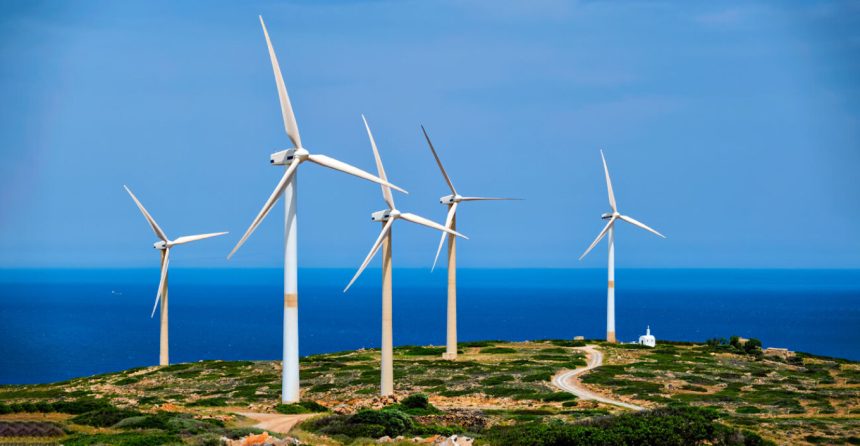
The new spatial planning establishes explicit exclusion zones for wind farms, prohibiting their installation in Attica, in the Thessaloniki Metropolitan Area, at altitudes above 1,200 meters, as well as in sensitive Ramsar wetlands, Natura protected areas, unclaimed beaches and high tourist priority zones.
Particular emphasis is placed on the protection of island areas , where clear restrictions are provided for islands under 300 square kilometers, a mandatory special landscape study is imposed during licensing and the maximum land cover ceiling is maintained at 4% per Municipal Unit .
With this arrangement, Athens is unwaveringly exercising its national sovereignty and development responsibilities , ensuring a balanced energy transition and the protection of natural resources, at the same time that Ankara is attempting once again to turn a purely internal environmental issue into a field of artificial diplomatic tension .

