Bloodshed in Saudi Arabia , where, according to the announced toll, at least 12 people were killed and 309 injured in the attack that occurred on Saturday, October 10, at King Khalid International Airport in Riyadh . The attack, attributed to Yemen’s Houthis , caused serious disruption at one of the most important air hubs in the Middle East, with authorities urgently mobilizing the capital’s health services.
The death toll attributed to the Saudi General Authority of Civil Aviation is four Saudis and eight foreigners , including an American citizen. Several of the 309 injured are reported to be in critical condition , raising concerns that the death toll could rise.
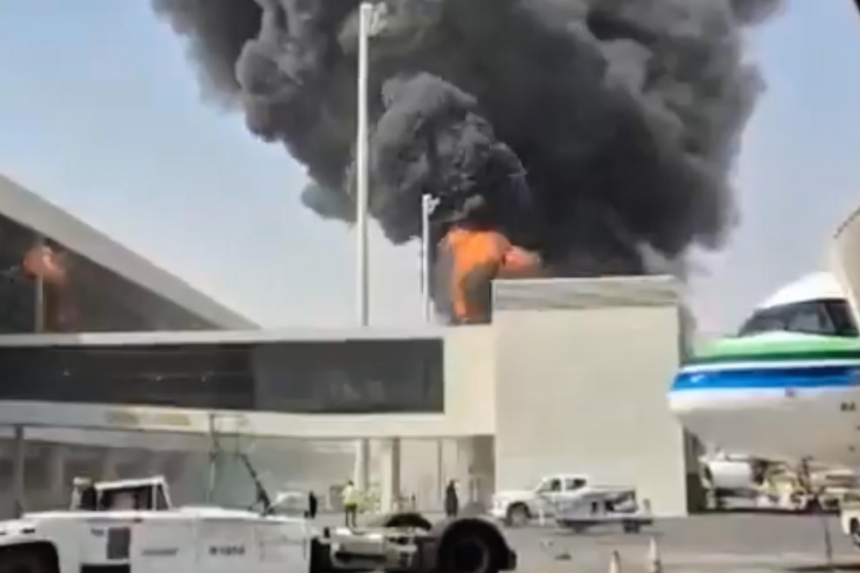
According to the information released, the airport was hit by a missile attack , attributed to Houthi forces. The strike triggered widespread mobilization of emergency services, while images circulating on social media showed thick smoke rising from the airport facilities.
The situation in Riyadh’s hospitals was described as particularly serious. Doctors and nurses were urgently called to their services , as ambulances transported the injured from the airport. Health authorities were put on high alert in order to ensure the fastest possible treatment for those in need of immediate medical attention.
The damage to the airport facilities is being assessed. The attack caused severe disruption to air travel , with airlines including Kuwait Airways, Etihad Airways and Qatar Airways cancelling flights to and from the Saudi capital. Some cancellations were reported to be extended until Monday.
The airport administration urged travelers to contact their airlines directly before going to the facilities, as the flight schedule had been significantly affected.
The new attack takes on even greater significance because it is not an isolated incident . According to information that has been made public, Saudi airports have been targeted in previous days, with previous strikes causing casualties.
The repetition of the attacks highlights the seriousness of the threat to the country’s civil aviation infrastructure and raises serious concerns about the effectiveness of their protection measures.
At the heart of the crisis are the Houthis , the armed group that controls a significant part of Yemen and maintains close ties with Iran . Their confrontation with Saudi Arabia has caused serious military crises at times, with attacks on airports, energy facilities and other strategic targets.
The targeting of an international airport with high passenger traffic is of particular concern, as it transfers the consequences of the military conflict directly to the civilian population . The presence of passengers of different nationalities among the victims highlights that the impact of such attacks goes beyond the borders of the countries involved.
At the same time, Saudi Arabia is faced with a difficult strategic dilemma. On the one hand, it is called upon to protect its infrastructure and prevent new attacks. On the other hand, any large-scale military response may lead to a new round of retaliation , further widening the conflict in the Arabian Peninsula.
Adding to the already tense environment is the reported attack by Saudi fighter jets on Sanaa airport in Yemen. The information refers to four airstrikes, a development that, if confirmed, reinforces the image of a dangerous sequence of military actions and reprisals.
The situation is also of particular importance to the United States , which maintains close strategic relations with Saudi Arabia. The presence of an American citizen among the reported victims lends additional diplomatic weight to the incident, while any further military escalation could directly affect American interests in the region.
Yemen is located in a region of extreme strategic importance, close to the Bab el-Mandab Strait , through which a significant portion of international shipping passes. A new escalation could affect not only Saudi Arabia’s security, but also trade and energy transport in the wider region.
The strike on Riyadh highlights the vulnerability of major civilian infrastructure to modern missile attacks. Even a state with significant military capabilities and advanced air defense systems cannot take for granted the absolute protection of its airports, energy facilities, and major urban centers.
The October 10 attack, based on the reported account, is among the bloodiest strikes that have occurred on Saudi soil in the context of the confrontation with the Houthis.
With dozens of families grieving or anxious about the fate of their wounded, attention is now turning to the decisions that Riyadh and its allies will make.
The big question is whether the new bloodshed will lead to an effort at de-escalation or whether it will be the starting point for an even more dangerous military confrontation.
Civil aviation safety, the protection of civilians and the risk of conflict escalation are now at the heart of a crisis with potentially serious consequences for the entire Middle East.