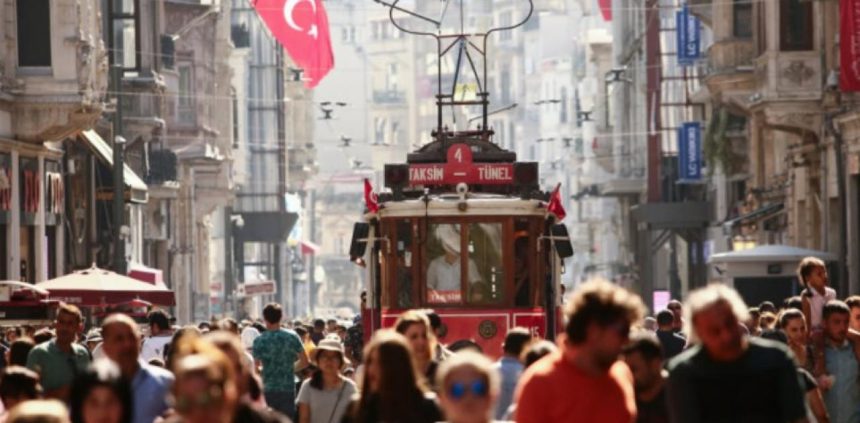
For almost two decades, Turkey sold the European market an almost irresistible product. Sun, sea, large hotel complexes and a bill that, translated into euros or pounds, looked like a typographical error. This product no longer exists in the same form today. Costs have risen in both hotels and catering and leisure activities, and with it the main competitive advantage of the entire sector has disappeared.
The change is not first seen in the indicators. It is seen in the people themselves who returned this year. As a Bloomberg report notes, British families with years of consistency in the same resorts found bills many times higher than they remembered, as a result of which the country ceased to be the obvious first choice for the summer.
Behind the phenomenon is not some sudden market speculation, but a conscious choice by Ankara . The authorities are curbing the devaluation of the lira , keeping it moving slower than domestic inflation , with the aim of limiting price pressures. The logic makes sense for the domestic economy, but it creates a serious problem abroad. When prices run faster than the currency, the foreign visitor pays more for the exact same things. The euro and sterling now buy significantly less, and the famous quality-price ratio that built the destination’s reputation is shrinking.
Official figures from the Turkish Ministry of Culture and Tourism confirm the trend, recording a decline in total arrivals . The decline is most pronounced in the British market , one of the most critical for the industry. At the same time, travel agents are seeing demand shift to cheaper destinations, with Slovenia , Montenegro and Tunisia gaining ground.
The most telling element, however, does not concern foreigners. It concerns the Turks themselves. The punctuality has affected them in the same way, and many now choose to spend their holidays abroad . The Greek islands of the Eastern Aegean have emerged as a popular destination, precisely because in many cases they are cheaper than domestic resorts. When the residents of a country cross borders to find cheaper holidays, any further analysis of the internal cost is superfluous.
There is, of course, the other side of the coin. Although visitors have declined, total revenues remain high, because those who come spend more per trip. For the Turkish economy, this is not a detail. Foreign exchange inflows and the containment of the external balance are among its most sensitive indicators, and tourism continues to support them.
At the business level, however, the numbers are not so pleasant to read. Increased operating costs are putting severe pressure on profit margins , while geopolitical uncertainty in the wider region has weighed on the picture precisely during the early booking period, when most of the season is judged.
Turkish tourism has been based for decades on a triangle: natural environment, strong infrastructure and low prices. The third side has now receded significantly. Whether the other two are enough to keep the industry on track is a question that will be answered not in analyses, but in bookings for the coming seasons.