

The final seal on the Greek legal victory over the “Turkaegean” issue was put by today’s (Friday) decision of the competent European institution. The Boards of Appeal of the EU Intellectual Property Office (EUIPO) rejected the Turkish appeal and confirmed the cancellation and cancellation of “Turkaegean” as a European trademark.
With this development, the Greek position is also strengthened at the second instance , as the Board of Appeal is the final administrative review body within the EUIPO, and the rejection of the appeal validates the cancellation in its entirety.
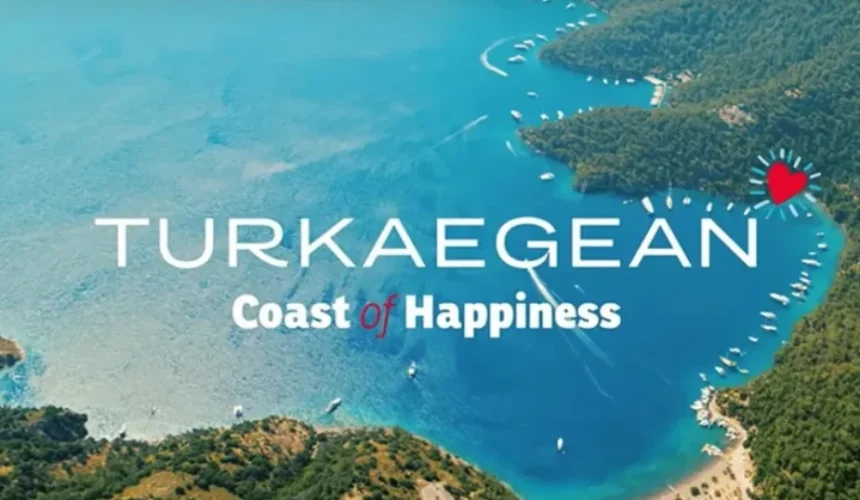
The case has its roots in the summer of 2021. On July 16, 2021 , the Tourism Promotion and Development Organization of Turkey (TGA) filed for registration with the EU Intellectual Property Office the trademark “Turkaegean” — a term that combines “Turk” with “Aegean”. The mark was associated with the tourism campaign “Turkaegean: Coast of Happiness”, which Turkey promoted in 2022 and which provoked strong reactions from the Greek side, which saw in it an expression of broader geopolitical aspirations. Athens’ argument has been clear from the beginning. Specifically, that the term attempted to commercially link Turkey with a region closely intertwined with Greek cultural and geographical identity .
The systematic legal counterattack was launched through the Industrial Property Organization (OBI) of the Ministry of Development. Since May 2022 , when OBI became the competent body in Greece for trademarks, it has been coordinating and supporting all actions to infringe the trademark. In this context, in February 2023 , an application for cancellation was filed before the competent EU office. The effort bore fruit in January 2025 , when the European Intellectual Property Office issued a decision canceling and removing the trademark from the register. The EUIPO considered, in accordance with European criteria, that the term merely described the geographical origin of the services, was devoid of distinctive character and had not acquired distinctiveness through use.
The Turkish side did not accept the decision and appealed before the Board of Appeal . In its appeal, Ankara argued, among other things, that the term does not constitute a geographical indication and that, therefore, it should not have been annulled. However, these arguments did not convince the competent body, which with its decision today fully validated the initial judgment, effectively closing the cycle of administrative challenge at EU level.
The Greek government described the development as a vindication of national positions . Development Minister Takis Theodorikakos stressed that the decision of the competent EU body confirms “the obvious” in a second instance, namely that the term “Turkaegean” lacks any legal and commercial basis and is marginalized. As he stressed, the development did not come about by chance but is the result of a long, systematic effort initiated by the Ministry of Development in coordination with the OBI. “We refuted with strong legal, historical and commercial arguments the attempt to mislead the consumer public and geopolitically instrumentalize trademarks,” noted Mr. Theodorikakos, adding that Greece is proving in practice that it effectively defends its national interests “with determination, methodicality and the use of every legal instrument in all international fora.”
The decision also took on a special symbolic character due to the date. Health Minister Adonis Georgiadis —who, as Minister of Development in 2023, had submitted the initial request for annulment— described the decision as “the most beautiful gift” for the anniversary of the Fall of Constantinople , which is marked on May 29, speaking of a great national success and emphasizing that Turkey’s use of the term is now illegal worldwide. Mr. Georgiadis thanked the OBI legal team and its former leadership for their work, recognizing the timelessness of an effort that unfolded over years and transcended government terms.
Beyond its legal dimension, the “Turkaegean” case highlights a broader issue: the use of trademarks as tools of “soft power” and the projection of geopolitical narratives. Athens initially viewed the registration not as a simple tourism campaign, but as an attempt to challenge, at the level of international perception, the identification of the Aegean with Greece. The final rejection of the trademark at the European level thus also serves as a legal precedent for the way in which the EU deals with terms that describe geographical origin and may mislead the consumer.
Today’s decision, therefore, does not only concern the removal of a word from a register. It constitutes the confirmation of a strategy that was based on international legality and the methodical use of the Union’s institutional tools. For the Greek side, the message being sent is twofold: on the one hand, the successful defense of the country’s cultural and geographical identity, and on the other hand, the protection of the economic activity of Greek businesses , especially in the crucial tourism sector, from a term that could create confusion in the market. With the ratification of the annulment at second instance, the cycle of administrative challenge is completed, leaving open only the theoretical possibility of further legal recourse at a higher European level.