
History is rarely written solely by generals and politicians. More often than not, its most indelible chapters are carved by ordinary, everyday people, who through their attitude to life transcend their individual measure and become beacons for entire nations.
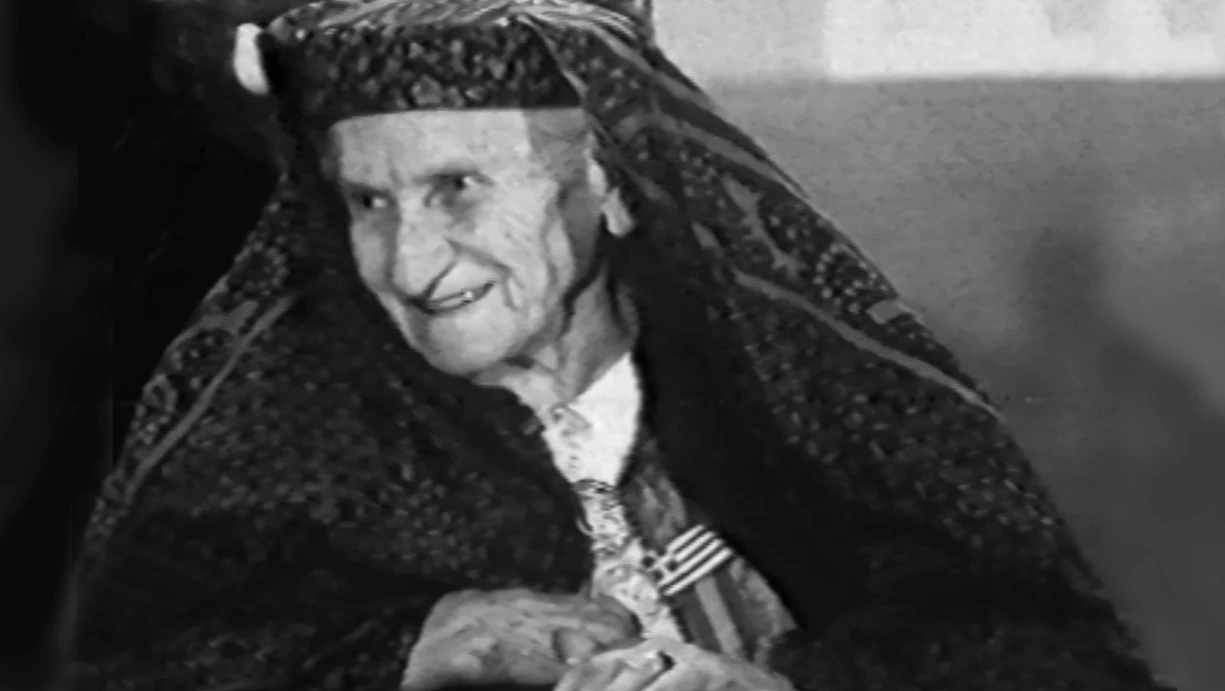
Such an emblematic and at the same time deeply human figure was Despina Achladiotou , the woman whom the entire Greek nation knew and adored as the “Lady of Ro” .
Today, 44 years since the day she closed her eyes forever, her journey is not simply a narrative of patriotism, but a study in human resilience, loneliness and the sense of duty towards the barren, but sacred soil of the homeland.
Born in 1890 in Kastelorizo , during a time of geopolitical turmoil for the Dodecanese, her life was destined to be inextricably linked to the rock of Ro. In 1924 , in a life decision that seems unthinkable today, she settled permanently on the small, deserted rocky islet — just a stone’s throw from the Turkish coast — with her husband, Kostas Achladiotis , and her elderly mother. Their daily life had no trace of romance; it was a harsh, relentless struggle for survival against the elements, the lack of basic goods, and absolute isolation. Livestock farming was their only source of livelihood, in a place where even drinking water was a luxury.
The real test, however, came in 1940. The death of her husband left her virtually unprotected. Yet, instead of seeking safety in neighboring Kastelorizo or a larger island, Despina Achladiotou made the conscious decision to put down roots on her rock. Initially with her mother and later completely alone , she transformed her presence on Ro into a silent, daily declaration of dominance and existence.
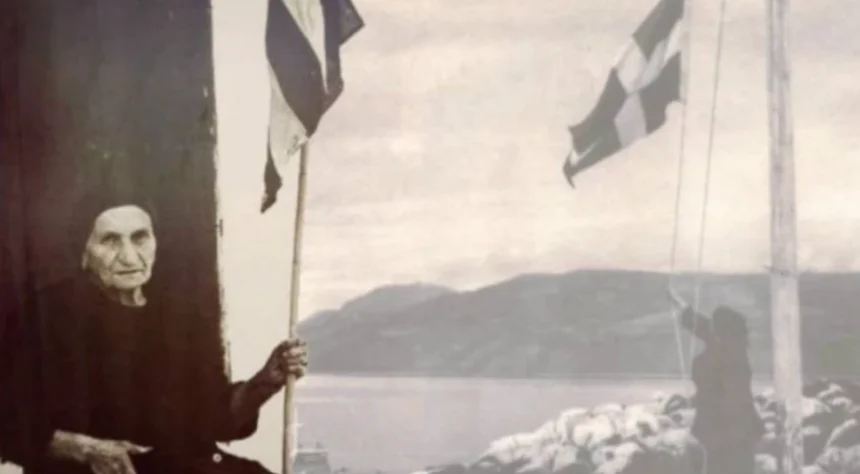
Her ritual was inviolable: Every morning at sunrise she raised the Greek flag and every evening she lowered it. She didn’t do it for the cameras that didn’t exist, nor to get credit from the state. She did it as a deep inner need, a daily confirmation that this severed rock breathed Greek.
But beyond the powerful symbolism of the flag, the Lady of Ro was a real, active fighter when historical circumstances demanded it. During World War II and the harsh Occupation, her isolated rocky islet served as a refuge of hope . Exposing herself to mortal danger, she hid, cared for and offered her meager food to Greek soldiers, resistance fighters and members of the Allied forces who were trying to escape to the Middle East.
When the war ended and the Dodecanese were officially incorporated into Greece, the Greek state and military leadership recognized her invaluable contribution, awarding her with honorary distinctions . She, however, was never changed by the spotlight that began to fall on her. She remained the same stoic figure, refusing to redeem her fame with a more comfortable life in the capital. She stayed there, faithful to her rock.
Despina Achladiotou breathed her last on May 13, 1982 , at the age of 92. Her funeral was held with honors at public expense and, fulfilling her last wish, she was buried in Ro , under the mast where the blue and white flag had flown proudly for decades.
Today, her legacy remains more alive than ever. In an era where the concepts of patriotism and sacrifice are often redefined, her figure reminds us that true heroism does not need big words or decrees. It lies in the perseverance, the quiet daily effort and the decision of a simple person to shoulder the burden of responsibility of an entire homeland .