

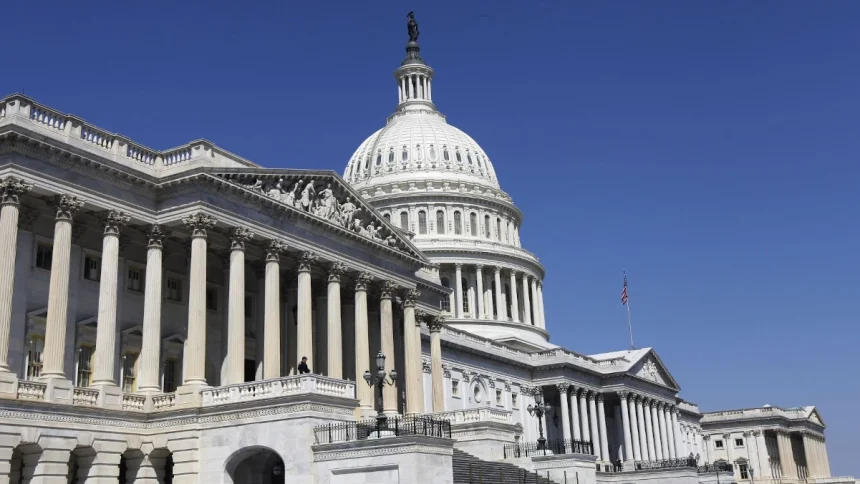
For the first time since the start of the US conflict with Iran, the House of Representatives voted on Wednesday to limit President Trump’s war powers . The resolution passed by a vote of 215 to 208 , marking the first time such a measure has been approved on a final vote by the House since the conflict began more than three months ago. It is a rare and symbolically powerful show of independence from the Republican-controlled legislature and a political blow that the White House could not ignore.
The decisive factor in the majority was the dissent of four Republicans who sided with the Democrats: Thomas Massie (Kentucky), Brian Fitzpatrick (Pennsylvania), Tom Barrett (Michigan), and Warren Davidson (Ohio). Equally crucial was that Democratic Representative Jared Golden of Maine, who had voted in the three previous failed attempts, this time supported the measure, giving the Democrats complete unanimity . The moment the result was announced, the Democratic representatives in the chamber erupted in applause.
To understand the significance of this vote, it must be placed in its historical context. Today’s vote was the fourth attempt, with three previous ones failing. The most recent was scheduled for May 21 , but the Republican leadership abruptly canceled it when it became clear that it was in danger of passing due to absenteeism. Rep. Gregory Meeks of New York, the top Democrat on the Foreign Affairs Committee and the resolution’s sponsor, called the move a White House cover-up. “Many of my Republican colleagues are feeling pressure in their constituencies as people see the cost of food and fuel rising,” he said.
The legal background of the resolution refers to the War Powers Act , which states that the president cannot maintain American forces in active hostilities for more than 60 days without Congressional approval.
Operation Epic Fury , the official title of the US military campaign against Iran, began on February 28, 2026. Today, 95 days later, the Trump administration has never sought congressional authorization. Defense Secretary Pete Hegseth has argued that the “ clock was reset ” when Trump announced a ceasefire in April. Legal analysts widely dispute that interpretation.
House Speaker Mike Johnson defended the government’s line clearly just before the vote. “I think it’s extremely dangerous to take away the ability to negotiate from the administration and the commander-in-chief at this time. That’s exactly what this resolution does. It weakens our position and our negotiating power for peace in the region,” he said. He added that “a war powers resolution at this time is untimely, very negative and dangerous .”
However, despite its symbolic resonance, the vote remains “largely symbolic” for now. To become legally binding, the Senate would also need to pass a similar resolution, which has yet to happen. Senate Democrats are gradually getting closer, having won a procedural vote last month to pave the way for a final vote. Even if both chambers vote in favor, the resolution is a “concurrent resolution” and the Trump administration argues that it needs a presidential signature, which he will not give. Democrats counter that the measure does not require a presidential signature to take effect. This is a legal question that remains unanswered.
Meanwhile, regardless of the vote, another front is opening. The inspectors general of the Pentagon, the State Department and USAID announced a joint investigation into the legality of the war with Iran, citing a legal obligation to oversee military operations that exceed 60 days. The move is an institutional confirmation that the war is extending beyond the limits set by US law.
The vote is part of a broader erosion of Trump’s overwhelming support in Congress. The same day, the House also approved a resolution that paves the way for a vote on sending aid to Ukraine , another measure the administration did not want. Republican senators have objected to funds in the “Big Bill,” while others have removed security funding for a Trump estate that violated budget rules.