

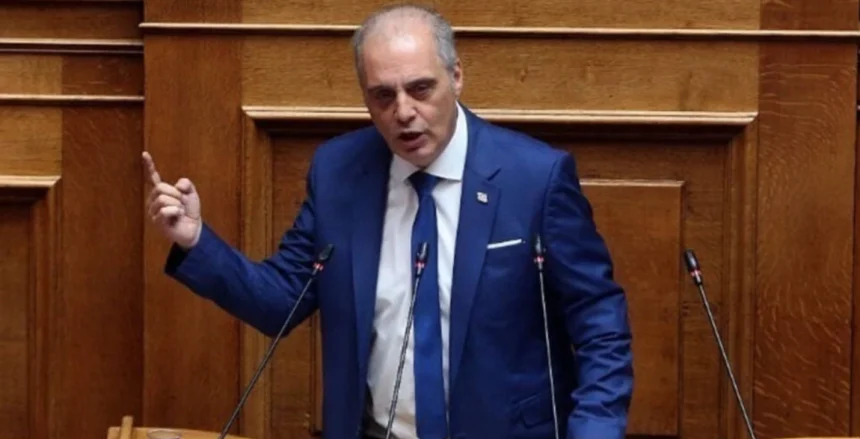
A seemingly formal parliamentary process turned into a substantive field of discussion on the quality of public dialogue and the limits of political confrontation , ultimately resulting in the lifting of the immunity of the president of the Hellenic Solution, Kyriakos Velopoulos.
In a close vote, in which a total of 194 MPs participated, the request was approved with 97 votes in favor, 79 against and 18 “present”. The case began after a lawsuit filed against the politician of another party, accusing him of insult and public, persistent defamation, which had initially led the competent parliamentary ethics committee to a unanimous recommendation in favor of the removal.
However, the debate in the plenary session brought to light a completely different dimension of the case, shedding light on the heavy background of the dispute. The parliamentary representative of the Hellenic Solution, Konstantinos Hitas, made a charged statement, revealing that the plaintiff had launched an unprecedented campaign of insults against the party, going so far as to call its executives and candidates with the extreme description of “pedophiles” . The Hellenic Solution side emphasized that, despite the legal actions (out-of-court and lawsuits) that it took to defend itself against this systematic tarnishing of reputations, the plaintiff escalated the attack by personally targeting the party president. Under the weight of this extreme vulgarity , as it was characterized, the Hellenic Solution Parliamentary Group decided to change its permanent position on immunities, voting against the request, while sounding the alarm about the “Aeolus bag” that opens when Parliament indirectly tolerates such behaviors.
This dramatic turn of events and the presentation of new data directly affected the stance of the government majority. The parliamentary representative of New Democracy, Dimitris Markopoulos, acknowledged the validity of the arguments, admitting that his own party has historically suffered from similar vulgarities and toxic behaviors. The crucial element that emerged was the emergence of new data , which the Ethics Committee did not have at its disposal when it issued its initial judgment.
Parliament, however, was faced with a severe institutional and procedural obstacle . Although the normal course of action would have been to refer the case to the committee for a re-evaluation of the facts, the strict time constraints imposed by Article 62 of the Rules of Procedure of the House did not allow this.
Faced with this procedural impasse, New Democracy chose to distance itself from the strict party line, calling on its MPs to take the new data into account and proceed with a vote “according to conscience” .
The final result and the decision of the Parliament go beyond the legal fate of a political figure and reflect the deep concern of the political system for the protection of institutional dignity against the derailment of political discourse, in an era where mudslinging often replaces political arguments.