

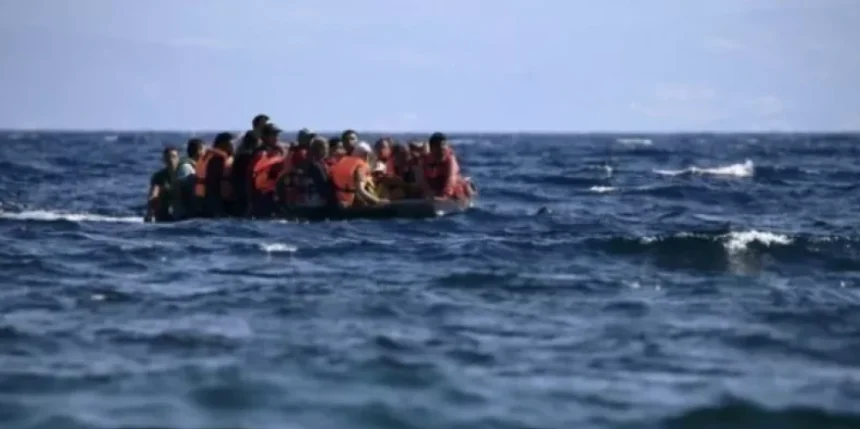
Faced with the specter of a new migration crisis similar to that of 2015, the frontline countries of the European South are erecting a common wall of diplomatic and operational armor.
Under the burden of continued instability in the Middle East , the leaders of Cyprus, Greece, Italy and Malta met within the framework of the Europe Gulf Forum , following up on their consultations in Ayia Napa, and co-signed a Joint Declaration that changes the data in the management of the European Union’s external borders.
The strategic alliance of the four Mediterranean states, which are the most exposed to irregular flows, moves on four central axes of action :
- Regional Security: Active support for all international efforts to stabilize the Middle East.
- Humanitarian Relief: Coordination of actions so that populations affected by conflicts receive the necessary support within their area, preventing uprooting.
- Implementation of the EU New Deal: Ensure the immediate and full implementation of the Compact on Migration and Asylum, with particular emphasis on the updated framework for crisis situations , cases of force majeure and addressing the instrumentalization of migration as a hybrid threat.
- Border Shielding: Strengthening common operational readiness for the effective control of the EU’s external borders, through coordinated initiatives and with full respect for International Law .
The Defense of the South is not limited to declarations, but is moving towards tangible measures. On the table of consultations is closer cooperation with countries of origin and transit , the merciless war against smuggling rings , as well as the prospect of activating the special EU Regulation for crisis situations .
The mobilization is immediate and a specific timetable has already been set. In order to maximize the effectiveness of national mechanisms in the face of a possible massive surge in flows, the Italian Minister of the Interior, Matteo Piantedosi , will convene an extraordinary ministerial meeting in Rome on June 17, 2026 , inviting his counterparts from Greece, Cyprus and Malta for the operational coordination of the security forces.
At the same time, the four leaders welcomed the unanimous adoption of the Chisinau Declaration on migration by the Committee of Ministers of the Council of Europe .
This development is considered pivotal, as the highest European institution now officially recognizes the complex challenges facing frontline member states, underlining that the system of the European Convention on Human Rights must adapt and respond adequately to these modern pressures.