

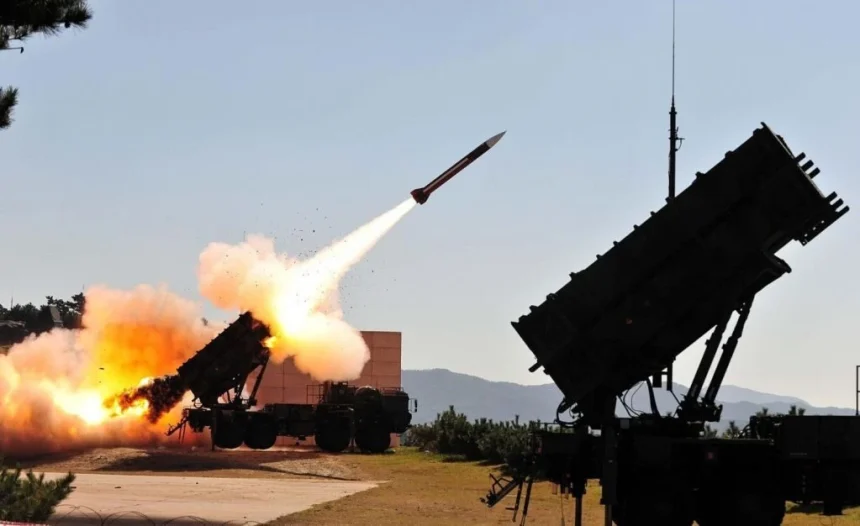
The decision of the Government Council for Foreign Affairs and Defense (KYSEA) , which met today, Monday 18/5, to return the Patriot anti-aircraft system arrays that had been deployed in Karpathos and Didymoteicho to their permanent bases, has caused concern and questions. The relevant decision put an end to a temporary provision that had been activated in previous months.
The systems were moved just a short time ago, specifically in early March, at a time of heightened tension on the international scene, with the US-Israeli-Iranian war causing strong concern about a possible escalation in the wider region. In the same context, Greece had responded to a request to strengthen the anti-aircraft “umbrella” in the context of NATO needs , with the Patriot deployment operating as a direct and strong deterrent presence in key positions.
Patriot systems are a key pillar of the Greek air defense, capable of intercepting air threats as well as long-range ballistic missiles . Their presence at critical points significantly enhanced the coverage of sensitive areas and critical infrastructure. Notably, the array deployed at Didymoteicho also covered broader air defense needs in the region, including neighboring allied countries, upon relevant requests.
The return of the systems to their bases is presented as a “normalization” of their operational configuration. However, there is no shortage of reasonable questions: in an environment that remains unstable, how “temporary” can the need for enhanced air defense really be? Above all, a mild but real question arises as to whether the constant movements of such critical systems reflect stable operational planning or more of a constant adaptation to developments that are running faster than planning.
In addition to the Patriot issue, the KYSEA meeting also discussed important armament programs , as well as general developments in the Middle East. Issues concerning Turkey were also included in the discussion, within an overall framework of constant geopolitical surveillance .

